
GHK-Cu
Also known as Copper peptide · Glycyl-L-histidyl-L-lysine copper(II) · GHK-Cu(II) · Gly-His-Lys-Cu
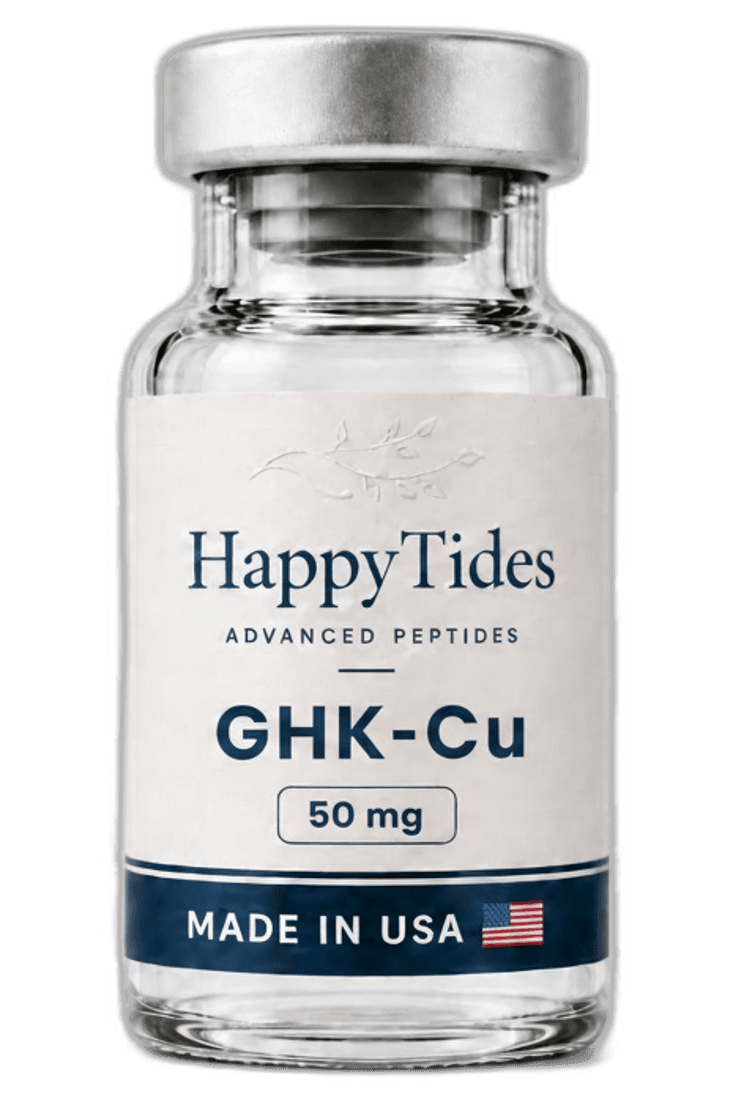
GHK-Cu is the 1:1 coordination complex of the tripeptide glycyl-L-histidyl-L-lysine with Cu(II).
The overview
What is GHK-Cu?
GHK-Cu is the 1:1 coordination complex of the tripeptide glycyl-L-histidyl-L-lysine with Cu(II). In the complex, the copper ion is coordinated by the imidazole nitrogen of histidine, the alpha-amino nitrogen of glycine, and the deprotonated glycyl-histidyl amide nitrogen, with the lysine epsilon-amino group enhancing complex stability (Lau & Sarkar). This high-affinity chelation lets GHK act as a copper carrier and modulates copper redox availability in vitro. In cultured dermal fibroblasts, GHK-Cu stimulates collagen type I/III gene and protein expression, with maximal effect near nanomolar concentrations, independent of changes in cell number (Maquart). It coordinately upregulates matrix metalloproteinase-2 (MMP-2) together with tissue inhibitors TIMP-1/TIMP-2, an MMP-2 effect attributable to the copper moiety rather than the apo-peptide (Siméon). Transcriptomic profiling (Connectivity Map data) indicates GHK modulates a broad gene set associated with extracellular-matrix remodeling, antioxidant response, TGF-beta signaling, and DNA-repair pathways (Pickart & Margolina). Described here strictly as in-vitro receptor-signaling and gene-expression observations.
In the research
Where GHK-Cu shows up
The areas researchers focus on with GHK-Cu - and why it has the science community paying attention.
- In-vitro extracellular matrix remodeling (collagen I/III, glycosaminoglycan gene and protein expression in fibroblast cultures)
- Copper(II) coordination chemistry and copper-carrier/redox-modulation studies
- MMP-2 / TIMP-1 / TIMP-2 metalloproteinase-balance signaling in cultured fibroblasts
- Transcriptomic / gene-expression modulation profiling (TGF-beta, antioxidant, DNA-repair pathway gene sets)
- Cell-culture models of tissue-remodeling and matricellular signaling
By the numbers
The facts that matter
To the molecule
Molecular specifications
Gly-His-Lys (GHK); one-letter GHK, complexed 1:1 with Cu(II)Sourced, not claimed
The science behind it
The peer-reviewed studies behind GHK-Cu, linked so you can read them yourself.
- Pickart, L., et al. (2015). GHK peptide as a natural modulator of multiple cellular pathways in skin regeneration. BioMed Research International.
- Pickart, L., & Margolina, A. (2018). Regenerative and protective actions of the GHK-Cu peptide in the light of new gene data. Cosmetics.
Straight answers
Questions, answered
Is GHK-Cu approved by the FDA?
No. GHK-Cu is not an FDA-approved drug. We supply it as a research-use-only reference compound, identity-verified for purity with a COA on every vial.
What class of compound is GHK-Cu?
GHK-Cu is classified as: Copper-binding tripeptide / metal-peptide coordination complex (matricellular signaling peptide).
What is the molecular weight of GHK-Cu?
The molecular weight of GHK-Cu is 401.91 g/mol (1:1 Cu(II) complex, C14H22CuN6O4); free GHK tripeptide = 340.38 g/mol (C14H24N6O4), with a molecular formula of C14H22CuN6O4 (1:1 GHK-Cu(II) complex).
What is the CAS number for GHK-Cu?
The CAS Registry Number for GHK-Cu is 49557-75-7 (commonly cited GHK-Cu); 89030-95-5 also registered for the Cu(II) complex; free GHK tripeptide = 72957-37-0.
What is the amino acid sequence of GHK-Cu?
GHK-Cu has the sequence: Gly-His-Lys (GHK); one-letter GHK, complexed 1:1 with Cu(II).
Available now
Get GHK-Cu
Identity-verified, third-party tested, made in the USA, and traceable to its lot - with a scannable COA on every vial. For research use only.
See pricing & order →Go deeper
More on GHK-Cu
Keep exploring
Related peptides
For in-vitro laboratory research use only. Not for human or animal consumption. Bodily introduction into humans or animals is strictly prohibited by law. GHK-Cu is not a drug and is not intended to diagnose, treat, cure, or prevent any disease. These statements have not been evaluated by the FDA.
Complete the stack
Researchers often pair GHK-Cu with
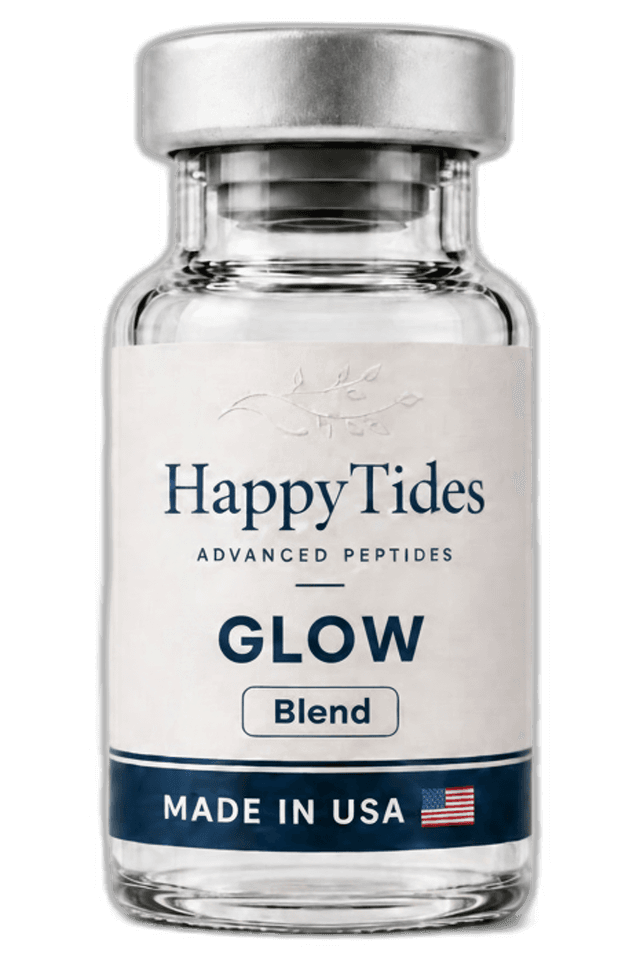
GHK-Cu is a named component of the GLOW research stack - the combined skin + recovery kit.
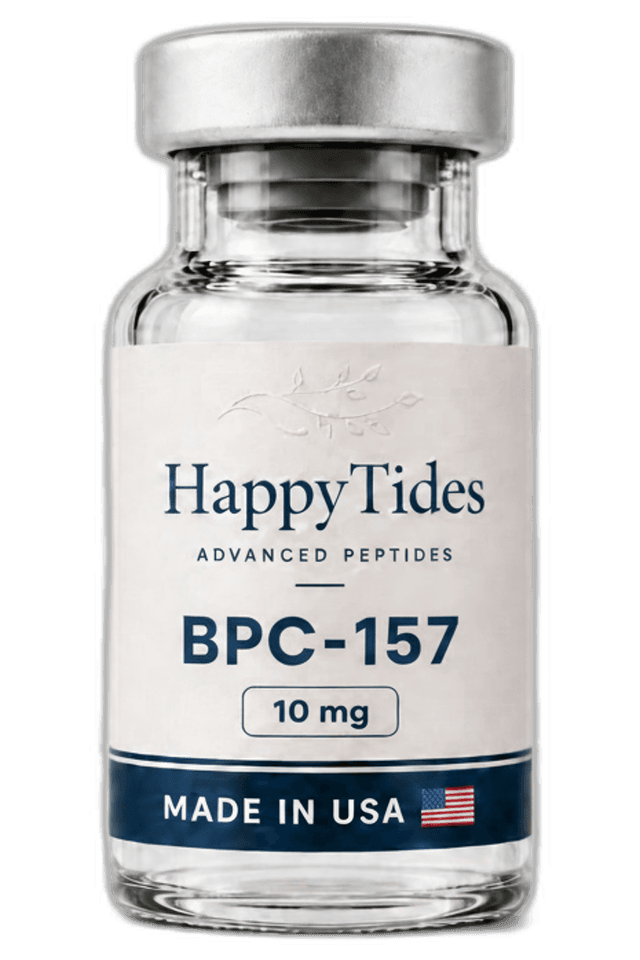
Connective-tissue / dermal-matrix remodeling is documented alongside systemic repair research.
ECM remodeling research sits beside actin-regulated migration research in the repair axis.