
GHK-Cu Research & Studies
Part of the full GHK-Cu guide - a copper-binding tripeptide reference compound, identity-verified with a COA on every vial.
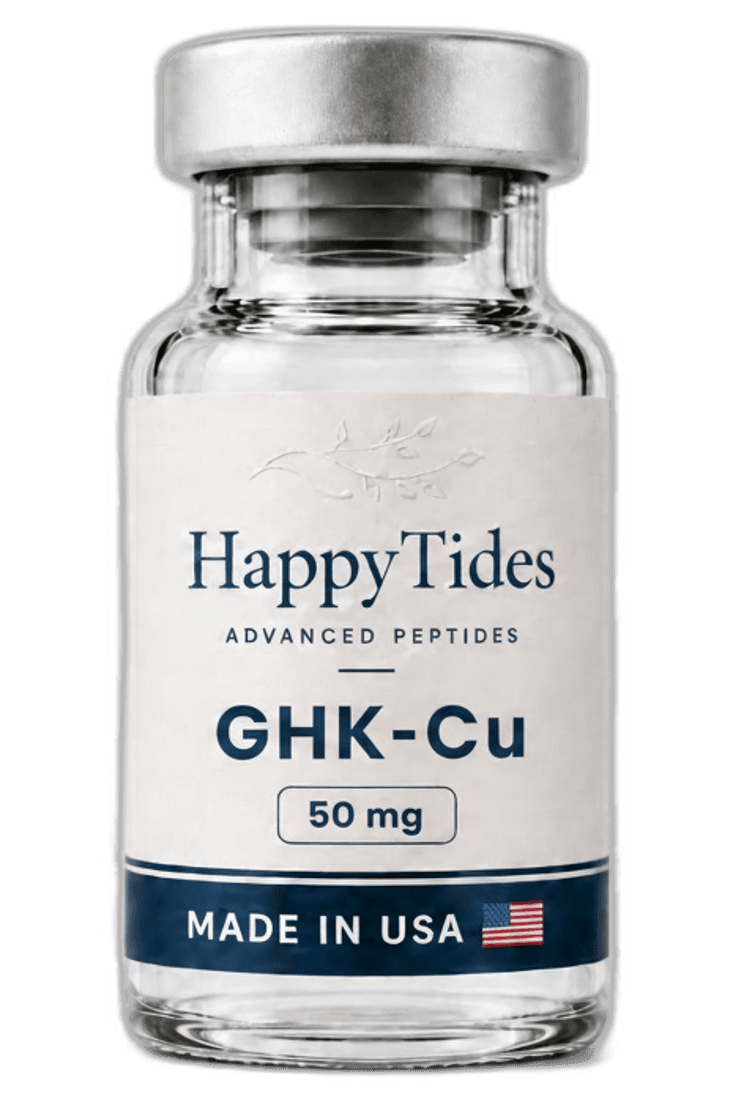
In brief
The research record for GHK-Cu provided here rests on five attributed citations spanning coordination chemistry, fibroblast collagen biology, metalloproteinase signaling, and large-scale gene-expression profiling. Each study is an in-vitro or analytical investigation, and the research areas listed in the entry map cleanly onto them: extracellular-matrix remodeling in fibroblast cultures, copper(II) coordination and redox-carrier studies, MMP-2/TIMP balance signaling, transcriptomic modulation profiling, and cell-culture models of tissue remodeling and matricellular signaling. The discovery context is documented too: GHK was isolated from human plasma by Loren Pickart in 1973 and identified as a growth-modulating tripeptide, with reported occurrence in human plasma, saliva, and urine (Pickart & Margolina, PMID 29986520). The sections below summarize what each provided source actually investigated, restricted to those sources and their stated findings, with no external studies, dosing data, or outcome claims introduced.
The detail
A closer look
01
Coordination chemistry and copper-carrier studies
The foundational analytical work is Lau and Sarkar (Biochem J 199:649-656, 1981, PMID 7340824), which characterized the interaction between copper(II) and glycyl-L-histidyl-L-lysine, explicitly describing GHK as a growth-modulating tripeptide from plasma. This study defines the donor set and stability features that the rest of the field relies on: histidine imidazole nitrogen, glycine alpha-amino nitrogen, deprotonated Gly-His amide nitrogen, and stabilization from the lysine epsilon-amino group. Within the provided research areas, this anchors the copper(II) coordination chemistry and copper-carrier/redox-modulation line of investigation. Its contribution is structural and physicochemical rather than cellular: it establishes how the metal is held, which is the precondition for interpreting every later functional assay as a property of the defined complex rather than of loose copper or bare peptide.
02
Fibroblast extracellular-matrix studies
Two citations carry the in-vitro fibroblast work. Maquart et al. (FEBS Lett 238:343-346, 1988, PMID 3169264) investigated stimulation of collagen synthesis by the tripeptide-copper complex in fibroblast cultures, reporting maximal collagen-synthesis stimulation near 10^-9 M and independent of cell number. Simeon et al. (Life Sciences, 2000, PMID 11045606) investigated MMP-2 expression by fibroblast cultures, reporting coordinate upregulation of MMP-2 alongside TIMP-1 and TIMP-2 and attributing the MMP-2 effect to the copper moiety. Together these populate the entry's research areas covering collagen I/III and glycosaminoglycan expression, MMP-2/TIMP metalloproteinase-balance signaling, and cell-culture models of tissue remodeling. Both are cultured-cell investigations; the entry frames their results strictly as in-vitro gene- and protein-expression observations within matricellular signaling.
03
Transcriptomic profiling and review synthesis
The broadest research dimension comes from Pickart and Margolina (Int J Mol Sci 19(7):1987, 2018, PMID 29986520) and Pickart, Vasquez-Soltero, and Margolina (BioMed Research International, 2015, PMID 26236730). The 2018 work uses Connectivity Map gene data to profile GHK's modulation of extracellular-matrix remodeling, antioxidant response, TGF-beta signaling, and DNA-repair gene sets, and reports that GHK affects roughly 31.2% of human genes by at least 50% expression change in that analysis. The 2015 paper frames GHK as a natural modulator of multiple cellular pathways in skin-regeneration cell models. These map to the entry's transcriptomic/gene-expression modulation research area. They are profiling and review analyses of expression data and cell-model behavior - described here as gene-set modulation findings, not as demonstrated therapeutic or clinical outcomes.
The fine print: products are sold for laboratory research use only and are not for human or animal consumption. Bodily introduction into humans or animals is strictly prohibited by law. GHK-Cu is not a drug and is not intended to diagnose, treat, cure, or prevent any disease. These statements have not been evaluated by the FDA.