Side by side, no guesswork

Find your peptide.

Two compounds, head to head - what each is characterized for, where it differs, which fits your research. The fast, honest way to choose with full context. Every vial is lab-tested, COA-backed, and made in the USA.

Browse the library →Research use only

Head to head

One versus the other.

Two compounds, stacked against each other on the specs that actually decide it.

BPC-157 vs TB-500BPC-157 and TB-500 are frequently grouped together in laboratory literature as "healing" or "recovery" research peptides, but at the molecular level they operate through entirely distinct mechanisms. BPC-157 is a synthetic 15-amino-acid (pentadecapeptide) sequence derived from a human gastric juice protein, characterized in cell and isolated-tissue models as a modulator of endothelial and fibroblast signaling that engages vascular endothelial growth factor receptor 2 (VEGFR2) and the nitric oxide (NO) system. TB-500 is a synthetic N-acetylated heptapeptide (Ac-LKKTETQ) corresponding to residues 17-23 of thymosin beta-4, built around the conserved LKKTET actin-binding motif and studied as a receptor-independent regulator of monomeric (G-)actin. This page compares the two strictly on receptor-signaling, sequence, and biochemical grounds drawn from the reference dataset. All statements describe in-vitro and ex-vivo laboratory observations of molecular behavior. Nothing here concerns dosing, administration, clinical efficacy, or any outcome in living subjects, and no comparison of "effectiveness" is implied or possible from this mechanistic framing.
Compare
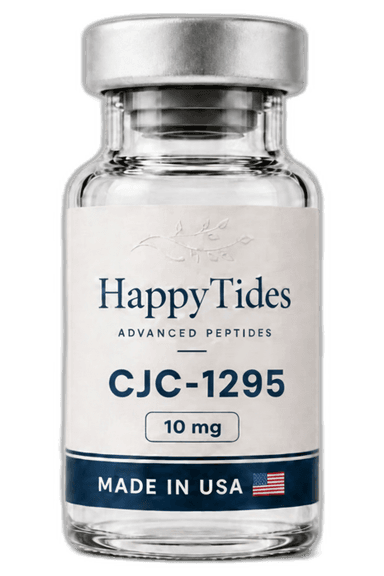
CJC-1295 No-DAC vs With-DACCJC-1295 exists in two laboratory forms built on the same growth-hormone-releasing-hormone backbone: a "no-DAC" tetrasubstituted GHRH(1-29) amide (Mod GRF 1-29) and a "with-DAC" variant carrying a Drug Affinity Complex albumin-binding linker. Both are research-grade GHRH-receptor (GHRHR) agonists used as reference compounds in receptor-signaling and peptide-stability studies. The single structural difference between them - the presence or absence of an Nε-maleimidopropionyl extension on a C-terminal lysine - governs how each behaves at the molecular level: how long it occupies the receptor system, how it persists against proteolysis, and how that translates into the tempo of secretagogue signaling in model systems. This page compares the two strictly on molecular and receptor-signaling grounds, drawing only on the dataset records for each entry. No human use, dosing, or outcome claims are made or implied; the comparison concerns the DAC modification, in-vitro/ex-vivo half-life behavior, and the pulsatility characteristics observed in laboratory and physiological-model contexts.
Compare
CJC-1295 vs SermorelinCJC-1295 without DAC (Mod GRF 1-29) and sermorelin are both synthetic growth hormone-releasing hormone (GHRH) analogs built on the 29-residue GHRH(1-29) framework, and both act as agonists at the GHRH receptor (GHRHR), a class B Gs-coupled G-protein-coupled receptor expressed on pituitary somatotroph cells in laboratory models. The molecules diverge principally in primary sequence and the resulting in-vitro metabolic stability: sermorelin reproduces the native human GHRH(1-29) sequence and is rapidly cleaved by dipeptidyl peptidase-IV (DPP-IV), while CJC-1295 without DAC carries four engineered substitutions, the most consequential of which (D-Ala at position 2) confers DPP-IV resistance. This reference compares the two strictly on molecular, structural, and receptor-signaling grounds as documented in the underlying dataset. It is intended for in-vitro and laboratory-research contexts only and makes no statement about clinical use, physiological outcomes, or efficacy of any kind.
Compare
Semaglutide vs RetatrutideSemaglutide and retatrutide are both members of the incretin peptide class, but they occupy opposite ends of a receptor-engagement spectrum in laboratory pharmacology. Semaglutide is a single-target, full agonist at the glucagon-like peptide-1 receptor (GLP-1R). Retatrutide is a unimolecular triple agonist that simultaneously engages the GIP receptor (GIPR), GLP-1R, and the glucagon receptor (GCGR). This page compares the two strictly on receptor-signaling, structural, and molecular grounds as characterized in in-vitro and structural-biology research models. All statements below describe biochemical and cell-based receptor behavior only; nothing here concerns dosing, physiological outcomes, or therapeutic use.
Compare
KPV vs BPC-157KPV and BPC-157 are frequently grouped together in laboratory peptide reference material, but at the level of molecular mechanism they occupy distinct signaling niches. KPV is a three-residue melanocortin-derived fragment (Lys-Pro-Val, the alpha-MSH 11-13 C-terminus) studied for receptor-independent attenuation of NF-kB and MAP kinase inflammatory cascades inside cultured cells. BPC-157 is a synthetic 15-residue cytoprotective peptide whose in-vitro profile centers on endothelial VEGFR2 expression, the VEGFR2-Akt-eNOS angiogenic cascade, and nitric-oxide-system modulation. This page compares the two strictly on mechanism, class, sequence, molecular data, and the receptor-signaling research areas recorded for each. It makes no claims about human use, dosing, efficacy, or disease. The contrast is best summarized as anti-inflammatory transcriptional signaling (KPV) versus angiogenic and cytoprotective endothelial signaling (BPC-157) - two different molecular questions, not two answers to the same one.
Compare
BPC-157 + TB-500: Stack Rationale (Research)BPC-157 and TB-500 are frequently paired in laboratory reference discussions because their reported in-vitro mechanisms converge on a shared theme: the regulation of actin dynamics and endothelial cell behavior. The two peptides reach that theme from opposite directions. BPC-157, a synthetic 15-residue oligopeptide (GEPPPGKPADDAGLV, C62H98N16O22, ~1419.5 g/mol), is described in cell-based and isolated-tissue models as a modulator of endothelial and fibroblast signaling, acting through the VEGFR2-Akt-eNOS cascade and through FAK/paxillin phosphorylation that drives F-actin assembly. TB-500, the N-acetylated heptapeptide Ac-LKKTETQ (~889.0 g/mol free base, C38H68N10O14) corresponding to residues 17-23 of thymosin beta-4, works upstream at the level of the actin monomer itself: in cell-free systems the parent protein sequesters G-actin, holding it in a polymerization-incompetent state. This page frames why the two are co-studied strictly on receptor-signaling and molecular grounds, drawing only on their dataset entries. Nothing here describes human use, dosing, or therapeutic outcome; the rationale is mechanistic and confined to in-vitro and ex-vivo observations.
Compare

The whole field

More than two? Mapped.

When a class has several players, we line them all up - characterization, specs, and where each one sits.

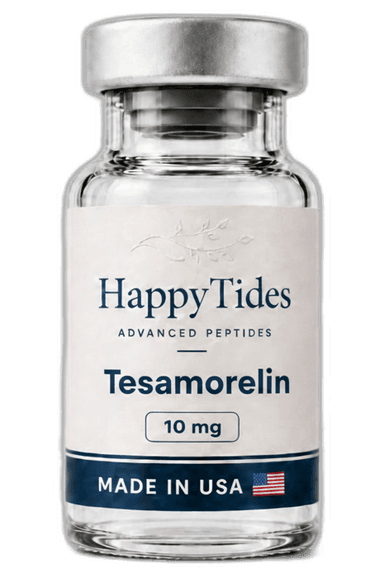
Tesamorelin vs Sermorelin vs CJC-1295Tesamorelin, sermorelin, and CJC-1295 without DAC (Mod GRF 1-29) are three synthetic analogs of growth hormone-releasing hormone (GHRH) studied as ligands for the same molecular target: the GHRH receptor (GHRHR), a class B G-protein-coupled receptor on anterior-pituitary somatotroph cells. Because all three share this receptor and the same canonical Gs/adenylyl cyclase/cAMP/PKA signal-transduction route, they are best compared on structural and receptor-signaling grounds rather than on any single physical property. What distinguishes them in laboratory characterization is sequence length, the strategy each uses to resist enzymatic degradation, and the resulting receptor-occupancy kinetics observed in model systems. Sermorelin is the minimal GHRH(1-29) fragment; CJC-1295 without DAC is a substituted GHRH(1-29) amide engineered for protease resistance; and tesamorelin retains the full native GHRH(1-44) backbone with an N-terminal lipid modification. This reference compares the three strictly as receptor-signaling research compounds, using only the molecular and mechanistic data recorded for each entry. Nothing here addresses human use, dosing, or outcomes.
Compare
Healing & Recovery Peptides ComparedThe peptides grouped here under the "regenerative" or "recovery" heading - BPC-157, TB-500, GHK-Cu, and KPV - are studied together not because they share a receptor, but because their reported in-vitro activities converge on tissue-remodeling biology: endothelial signaling, cytoskeletal dynamics, extracellular-matrix gene expression, and inflammatory-pathway modulation. Mechanistically, however, they are four very different molecules. One is a 15-residue cytoprotective oligopeptide, one is an actin-binding β-thymosin fragment, one is a copper-coordination complex, and one is a melanocortin-derived tripeptide that moves through a peptide transporter. This page compares them strictly on molecular and receptor-signaling grounds - class, sequence, mass, and the cellular pathways each engages in laboratory models - rather than on any human or clinical readout. Every statement is drawn from the cited in-vitro and ex-vivo literature in the reference dataset; nothing here describes a personal-use protocol, an outcome, or an efficacy claim. Read it as a class roundup for distinguishing four mechanistically distinct research compounds that happen to be discussed within the same regenerative-signaling framework.
Compare
Growth Hormone Secretagogues ComparedGrowth hormone secretagogues are research peptides studied for their ability to engage the receptor machinery that governs somatotroph signaling in laboratory models. This reference compares five of them on strictly molecular and receptor-signaling grounds: CJC-1295 without DAC, CJC-1295 with DAC, sermorelin, tesamorelin, and GHRP-2. The first four belong to the growth hormone-releasing hormone (GHRH/GRF) analog family and act at the GHRH receptor (GHRHR), a class B Gs-coupled G-protein-coupled receptor expressed on pituitary somatotroph cells. GHRP-2 belongs to a separate pharmacological class: it is a synthetic hexapeptide that engages the growth hormone secretagogue receptor type 1a (GHS-R1a), the ghrelin receptor, through a different G-protein and second-messenger route. The comparison below is organized around receptor identity, the intracellular signal-transduction cascade each peptide triggers, the structural modifications that distinguish the GHRH analogs from one another, and the molecular descriptors recorded in the dataset. All statements describe in-vitro and receptor-level characterizations only. Nothing here concerns human use, dosing, or physiological outcomes; the intent is to map how these molecules differ at the level of receptor coupling and peptide chemistry as documented in the cited mechanistic literature.
Compare

Still deciding?

Go straight to the source.

Every compound has its own deep-dive - sequence, molecular weight, mechanism, and real citations you can look up yourself.

For in-vitro laboratory research use only. Not for human or animal consumption. Not intended to diagnose, treat, cure, or prevent any disease. Comparisons characterize documented mechanisms and specifications - not human or animal outcomes.