
Retatrutide
Also known as LY3437943 · LY-3437943 · Triple G · GGG tri-agonist
Retatrutide is a unimolecular synthetic peptide that acts as a balanced agonist at three class B1 G-protein-coupled receptors: the GIP receptor (GIPR), GLP-1 receptor (GLP-1R), and glucagon receptor (GCGR).
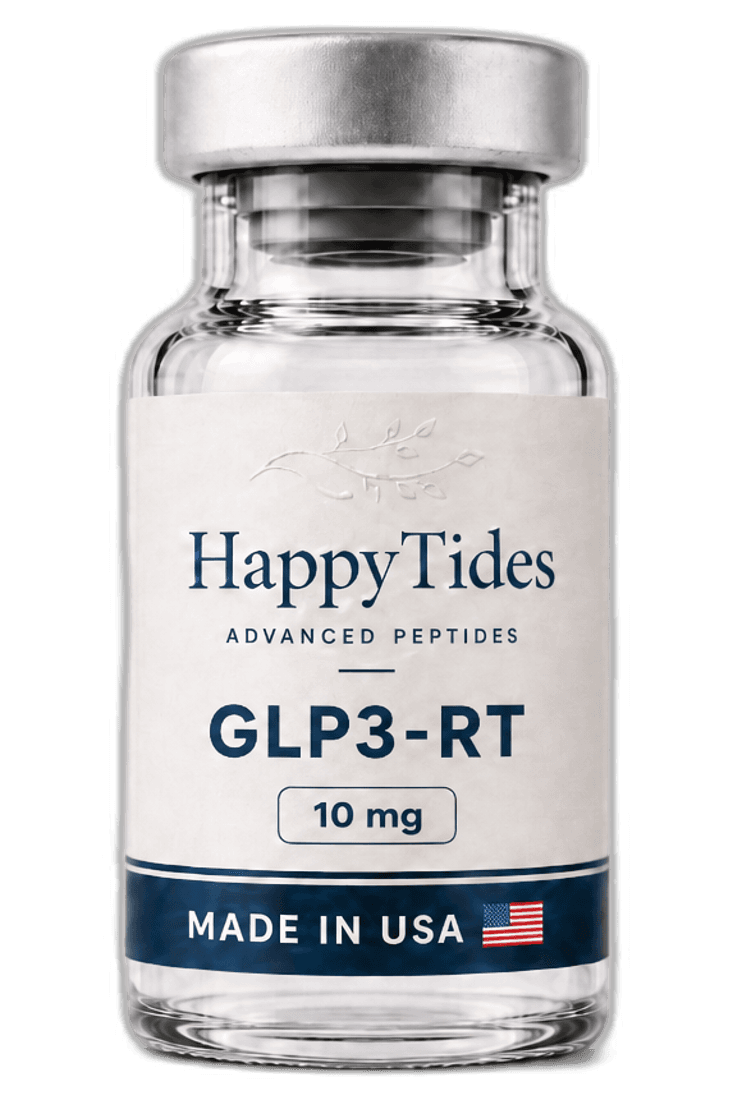
The overview
What is Retatrutide?
Retatrutide is a unimolecular synthetic peptide that acts as a balanced agonist at three class B1 G-protein-coupled receptors: the GIP receptor (GIPR), GLP-1 receptor (GLP-1R), and glucagon receptor (GCGR). In recombinant cell systems each receptor couples to Gs, so agonist binding drives adenylyl-cyclase activation and intracellular cAMP accumulation, the standard in-vitro readout used to quantify potency. In cell-based cAMP assays the molecule shows relatively greater GIPR activity with comparatively balanced GLP-1R and GCGR engagement. Cryo-electron microscopy of the peptide bound to each receptor-Gs complex shows a conserved N-terminal interaction that inserts into the orthosteric transmembrane pocket to trigger the active-state conformation, while sequence variations in the mid-region peptide are read out by receptor-specific extracellular-loop (ECL1/ECL2) and TM1-tip contacts, rationalizing simultaneous tri-receptor activation. Non-coded residues (Aib, alpha-methyl-leucine) confer protease resistance and helix stabilization, and fatty-diacid acylation promotes albumin binding for extended residence in vitro.
In the research
Where Retatrutide shows up
The areas researchers focus on with Retatrutide - and why it has the science community paying attention.
- In-vitro GPCR pharmacology: comparative cAMP/Gs signaling potency and efficacy across GIPR, GLP-1R, and GCGR
- Structural biology: cryo-EM of peptide-receptor-Gs ternary complexes and active-state conformational mechanism
- Receptor selectivity and bias profiling of unimolecular multi-agonist peptides
- Structure-activity relationship studies of non-coded residues (Aib, alpha-methyl-Leu) and lipidation on receptor engagement
- Cellular models of incretin-receptor signaling and downstream second-messenger cascades
By the numbers
The facts that matter
To the molecule
Molecular specifications
39-residue synthetic peptide built on a GIP-based backbone with non-coded residues and C-terminal amidation. Reported representation: Tyr-Aib-Gln-Gly-Thr-Phe-Thr-Ser-Asp-Tyr-Ser-Ile-(alpha-Me-Leu)-Leu-Asp-Lys-Lys(gamma-Glu-AEEA-AEEA-C20 diacid)-Ala-Gln-Aib-Ala-Phe-Ile-Glu-Tyr-Leu-Leu-Glu-Gly-Gly-Pro-Ser-Ser-Gly-Ala-Pro-Pro-Pro-Ser-NH2. Key modifications: Aib at position 2 and position 20, alpha-methyl-L-leucine at position 13, and fatty-diacid (C20) acylation via a gamma-Glu/AEEA linker on the Lys at position 17. (Position numbering per the cryo-EM structural paper; one-letter backbone approx. YXQGTFTSDYSIXLDKKAQXAFIEYLLEGGPSSGAPPPS-NH2 with X = non-coded residues.)Sourced, not claimed
The science behind it
The peer-reviewed studies behind Retatrutide, linked so you can read them yourself.
- Coskun, T., et al. (2022). LY3437943, a novel triple GIP, GLP-1, and glucagon receptor agonist. Cell Metabolism.
Straight answers
Questions, answered
Is Retatrutide approved by the FDA?
No. Retatrutide is not an FDA-approved drug. We supply it as a research-use-only reference compound, identity-verified for purity with a COA on every vial.
What class of compound is Retatrutide?
Retatrutide is classified as: Synthetic incretin-class peptide; unimolecular triple agonist of the GIP receptor (GIPR), GLP-1 receptor (GLP-1R), and glucagon receptor (GCGR); long-acting lipidated (fatty-diacid–acylated) peptide.
What is the molecular weight of Retatrutide?
The molecular weight of Retatrutide is 4731.33 g/mol (average mass, free base), with a molecular formula of C221H342N46O68.
What is the CAS number for Retatrutide?
The CAS Registry Number for Retatrutide is 2381089-83-2.
What is the amino acid sequence of Retatrutide?
Retatrutide has the sequence: 39-residue synthetic peptide built on a GIP-based backbone with non-coded residues and C-terminal amidation. Reported representation: Tyr-Aib-Gln-Gly-Thr-Phe-Thr-Ser-Asp-Tyr-Ser-Ile-(alpha-Me-Leu)-Leu-Asp-Lys-Lys(gamma-Glu-AEEA-AEEA-C20 diacid)-Ala-Gln-Aib-Ala-Phe-Ile-Glu-Tyr-Leu-Leu-Glu-Gly-Gly-Pro-Ser-Ser-Gly-Ala-Pro-Pro-Pro-Ser-NH2. Key modifications: Aib at position 2 and position 20, alpha-methyl-L-leucine at position 13, and fatty-diacid (C20) acylation via a gamma-Glu/AEEA linker on the Lys at position 17. (Position numbering per the cryo-EM structural paper; one-letter backbone approx. YXQGTFTSDYSIXLDKKAQXAFIEYLLEGGPSSGAPPPS-NH2 with X = non-coded residues.).
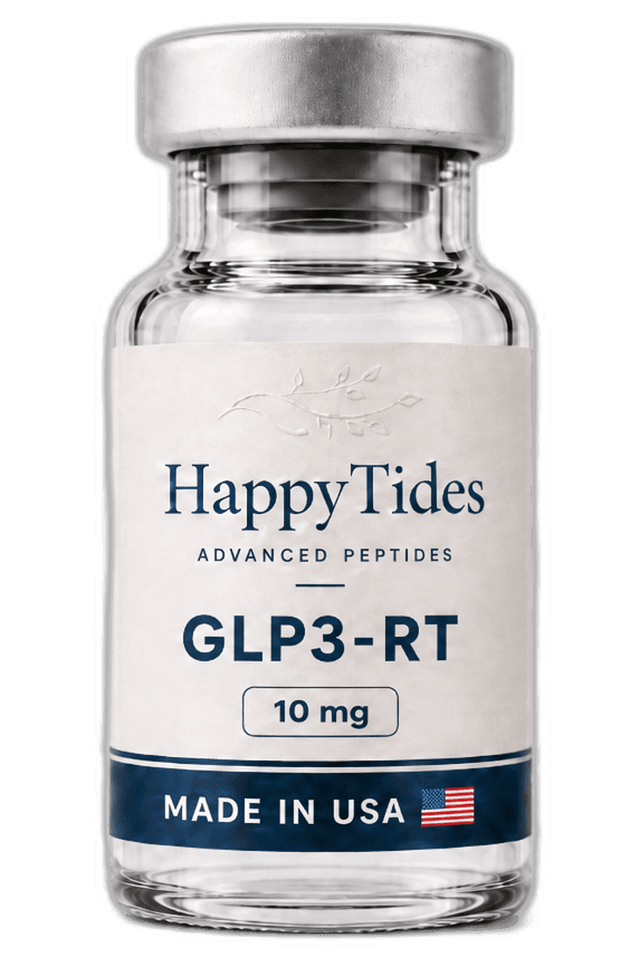
Available now
Get Retatrutide
Identity-verified, third-party tested, made in the USA, and traceable to its lot - with a scannable COA on every vial. For research use only.
See pricing & order →Go deeper
More on Retatrutide
Keep exploring
Related peptides
For in-vitro laboratory research use only. Not for human or animal consumption. Bodily introduction into humans or animals is strictly prohibited by law. Retatrutide is not a drug and is not intended to diagnose, treat, cure, or prevent any disease. These statements have not been evaluated by the FDA.
Complete the stack
Researchers often pair GLP3-RT with

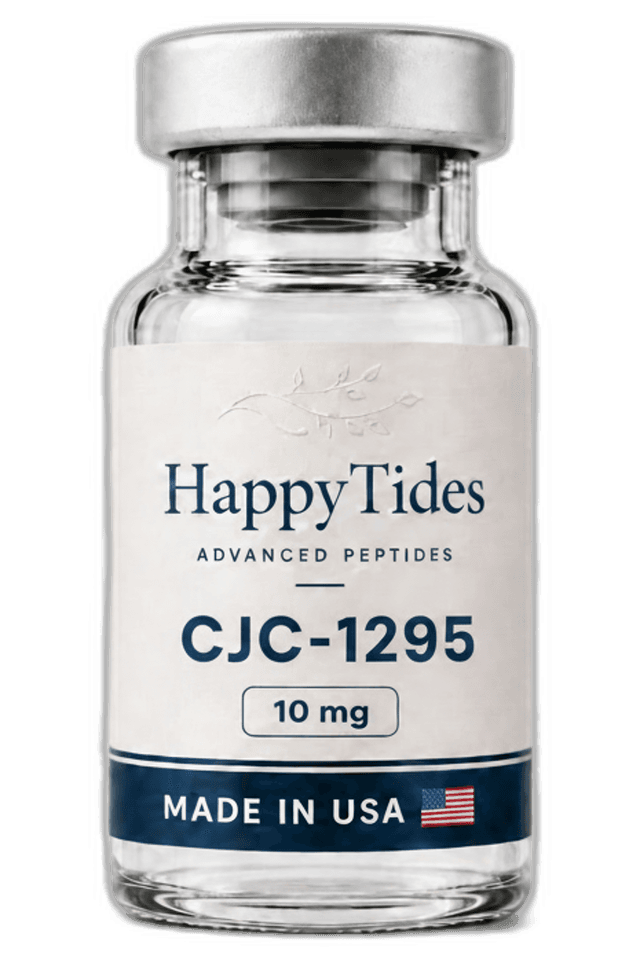
Body-composition research is co-discussed across incretin and GHRH research.
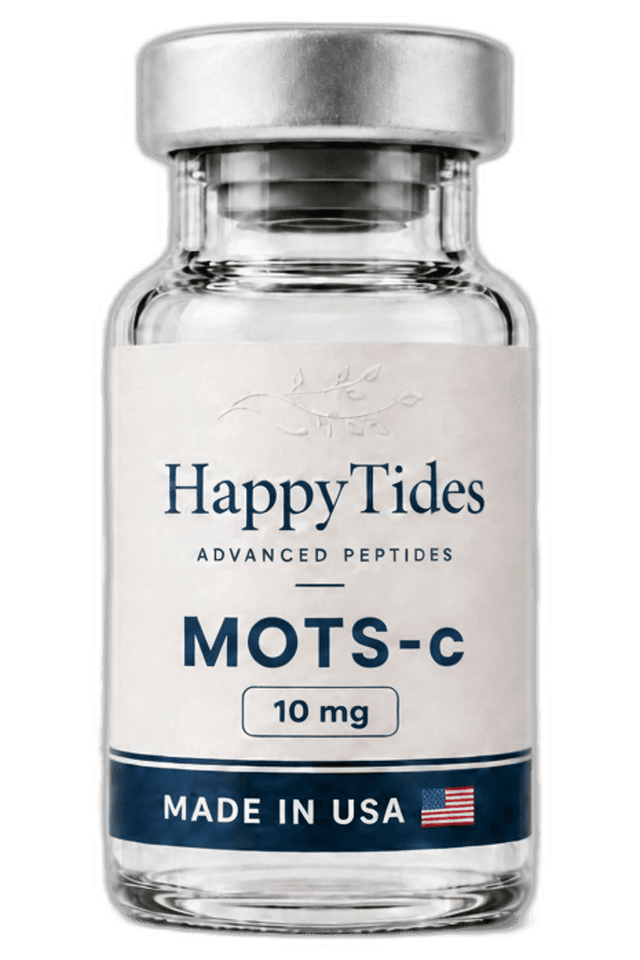
Metabolic / incretin research documented alongside mitochondrial-energy research.