
Tesamorelin vs Sermorelin vs CJC-1295
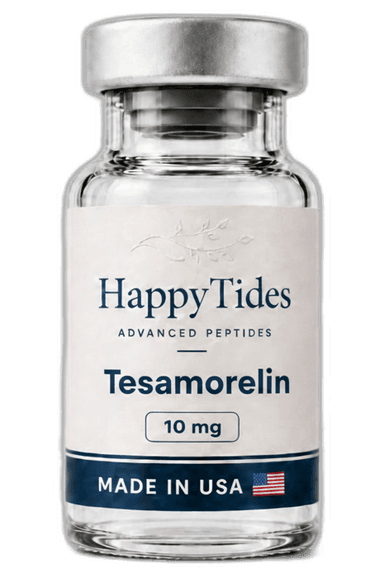
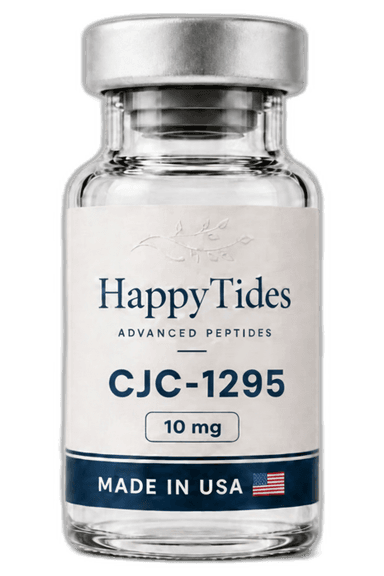
Tesamorelin, sermorelin, and CJC-1295 without DAC (Mod GRF 1-29) are three synthetic analogs of growth hormone-releasing hormone (GHRH) studied as ligands for the same molecular target: the GHRH receptor (GHRHR), a class B G-protein-coupled receptor on anterior-pituitary somatotroph cells. Because all three share this receptor and the same canonical Gs/adenylyl cyclase/cAMP/PKA signal-transduction route, they are best compared on structural and receptor-signaling grounds rather than on any single physical property. What distinguishes them in laboratory characterization is sequence length, the strategy each uses to resist enzymatic degradation, and the resulting receptor-occupancy kinetics observed in model systems. Sermorelin is the minimal GHRH(1-29) fragment; CJC-1295 without DAC is a substituted GHRH(1-29) amide engineered for protease resistance; and tesamorelin retains the full native GHRH(1-44) backbone with an N-terminal lipid modification. This reference compares the three strictly as receptor-signaling research compounds, using only the molecular and mechanistic data recorded for each entry. Nothing here addresses human use, dosing, or outcomes.
Research use onlyAt a glance
How they line up
| Aspect | Tesamorelin | Sermorelin | CJC-1295 without DAC |
|---|---|---|---|
| Peptide class | Synthetic GHRH/GRF analog; N-terminally lipid-modified 44-residue peptide; GHRHR agonist | GHRH receptor agonist / growth hormone secretagogue (29-amino-acid GHRH analog) | Synthetic GHRH/GRF analog; tetrasubstituted GHRH(1-29) amide; GHRH-receptor agonist class |
| Sequence basis | Full native human GHRH(1-44) with trans-3-hexenoyl group on N-terminal Tyr1; C-terminal amide | GHRH(1-29): YADAIFTNSYRKVLGQLSARKLLQDIMSR-NH2 (residues 1-29 of human GHRH) | Substituted GHRH(1-29) amide with D-Ala2, Gln8, Ala15, Leu27 |
| Length / residues | 44 residues (plus N-terminal lipid cap) | 29 residues | 29 residues |
| Molecular formula | C221H366N72O67S | C149H246N44O42S | C152H252N44O42 |
| Average molecular weight | 5135.9 g/mol (~5136 Da) | 3357.93 g/mol | ~3367.9 g/mol |
| Receptor target | GHRHR (class B Gs-coupled GPCR on somatotrophs) | GHRHR (class B Gs-coupled GPCR on somatotrophs) | GHRHR (class B Gs-coupled GPCR on somatotrophs) |
| Signaling cascade | Gs / adenylyl cyclase / cAMP / PKA / CREB | Gs / adenylyl cyclase / cAMP / PKA / CREB | Gs / adenylyl cyclase / cAMP / PKA (with downstream calcium influx) |
| Stability strategy | N-terminal trans-3-hexenoyl acylation resists DPP-4 cleavage | Unmodified; rapidly cleaved by DPP-IV at Tyr1-Ala2 bond | D-Ala2 substitution confers DPP-IV resistance |
| Albumin binding | None (lipid cap, not albumin tether) | None | None (no-DAC form lacks maleimidopropionyl-Lys30 extension) |
| Recorded receptor-occupancy framing | Stabilized full-length analog; long-acting GHRH-analog PK modeling | Short plasma half-life (~minutes) per entry | Comparatively short receptor-occupancy kinetics vs DAC variant |
- Tesamorelin
- Synthetic GHRH/GRF analog; N-terminally lipid-modified 44-residue peptide; GHRHR agonist
- Sermorelin
- GHRH receptor agonist / growth hormone secretagogue (29-amino-acid GHRH analog)
- CJC-1295 without DAC
- Synthetic GHRH/GRF analog; tetrasubstituted GHRH(1-29) amide; GHRH-receptor agonist class
- Tesamorelin
- Full native human GHRH(1-44) with trans-3-hexenoyl group on N-terminal Tyr1; C-terminal amide
- Sermorelin
- GHRH(1-29): YADAIFTNSYRKVLGQLSARKLLQDIMSR-NH2 (residues 1-29 of human GHRH)
- CJC-1295 without DAC
- Substituted GHRH(1-29) amide with D-Ala2, Gln8, Ala15, Leu27
- Tesamorelin
- 44 residues (plus N-terminal lipid cap)
- Sermorelin
- 29 residues
- CJC-1295 without DAC
- 29 residues
- Tesamorelin
- C221H366N72O67S
- Sermorelin
- C149H246N44O42S
- CJC-1295 without DAC
- C152H252N44O42
- Tesamorelin
- 5135.9 g/mol (~5136 Da)
- Sermorelin
- 3357.93 g/mol
- CJC-1295 without DAC
- ~3367.9 g/mol
- Tesamorelin
- GHRHR (class B Gs-coupled GPCR on somatotrophs)
- Sermorelin
- GHRHR (class B Gs-coupled GPCR on somatotrophs)
- CJC-1295 without DAC
- GHRHR (class B Gs-coupled GPCR on somatotrophs)
- Tesamorelin
- Gs / adenylyl cyclase / cAMP / PKA / CREB
- Sermorelin
- Gs / adenylyl cyclase / cAMP / PKA / CREB
- CJC-1295 without DAC
- Gs / adenylyl cyclase / cAMP / PKA (with downstream calcium influx)
- Tesamorelin
- N-terminal trans-3-hexenoyl acylation resists DPP-4 cleavage
- Sermorelin
- Unmodified; rapidly cleaved by DPP-IV at Tyr1-Ala2 bond
- CJC-1295 without DAC
- D-Ala2 substitution confers DPP-IV resistance
- Tesamorelin
- None (lipid cap, not albumin tether)
- Sermorelin
- None
- CJC-1295 without DAC
- None (no-DAC form lacks maleimidopropionyl-Lys30 extension)
- Tesamorelin
- Stabilized full-length analog; long-acting GHRH-analog PK modeling
- Sermorelin
- Short plasma half-life (~minutes) per entry
- CJC-1295 without DAC
- Comparatively short receptor-occupancy kinetics vs DAC variant
The difference
One receptor target, one canonical signaling cascade
CJC-1295 without DAC is described through the same Gs/adenylyl cyclase/cAMP/PKA axis with associated downstream calcium influx in model systems.
All three peptides are classified as GHRH/GRF analogs and act as agonists at the growth hormone-releasing hormone receptor (GHRHR), a class B (secretin-family) Gs-coupled GPCR expressed on pituitary somatotroph cells. In receptor-level and cell-based systems the binding event couples through the stimulatory G-protein (Gs) to activate adenylyl cyclase, raising intracellular cyclic AMP (cAMP), which in turn engages protein kinase A (PKA). For tesamorelin and sermorelin the recorded mechanism continues to PKA-mediated phosphorylation of the CREB transcription factor, modulating growth-hormone gene transcription and somatotroph secretory-vesicle mobilization. Because the three converge on an identical receptor and second-messenger pathway, comparative pharmacology between them centers not on which pathway is engaged but on how each molecule's structure affects receptor-binding determinants, enzymatic stability, and occupancy duration. Sermorelin's entry notes that signaling through the native receptor keeps model-system output subject to the usual somatostatin (SSTR) counter-regulation and IGF-1 feedback rather than bypassing those control loops, a framing that applies to GHRHR agonism generally as a class B GPCR signaling principle.
Worth knowing
Three approaches to the same degradation problem
Tesamorelin takes a third route: it retains the entire native GHRH(1-44) sequence but carries a trans-3-hexenoyl (3-hexenoic acid) group on the alpha-amino group of the N-terminal Tyr1.
The defining structural difference among these peptides is how each addresses cleavage by dipeptidyl peptidase-4 (DPP-4), the principal route of native GHRH inactivation. Sermorelin, as the unmodified GHRH(1-29) fragment, is the shortest sequence that still retains full GHRH activity; its entry records that it is rapidly cleaved by DPP-IV at the Tyr1-Ala2 bond, giving a short plasma half-life on the order of minutes. CJC-1295 without DAC keeps the GHRH(1-29) length but introduces four substitutions relative to native GRF(1-29) - D-Ala2, Gln8, Ala15, and Leu27 - placed at metabolically labile or oxidation-prone sites; the D-Ala2 substitution specifically confers DPP-IV resistance and lowers metabolic clearance in vitro/ex vivo. This lipophilic N-acylation confers resistance to DPP-4 cleavage while preserving receptor-binding determinants. So the same vulnerability - N-terminal proteolysis - is solved three ways: leaving it unmodified (sermorelin), substituting the labile residue (CJC-1295 no-DAC), or shielding it with a lipid cap (tesamorelin).
The difference
Sequence, size, and receptor-occupancy kinetics
These structural facts make the three a natural series for structure-activity research on how N-terminal modification and chain length influence GHRHR engagement and stability.
The three molecules differ substantially in size and composition. Sermorelin is a 29-residue C-terminally amidated peptide (C149H246N44O42S; average mass 3357.93 g/mol) corresponding exactly to residues 1-29 of human GHRH. CJC-1295 without DAC is also a 29-residue amidated GHRH(1-29) backbone but with its four substitutions, giving formula C152H252N44O42 and an average mass of about 3367.9 g/mol - slightly heavier than sermorelin, reflecting the substituted residues. Tesamorelin is markedly larger: the full GHRH(1-44) backbone plus the hexenoyl group yields C221H366N72O67S at roughly 5135.9 g/mol, and it is the only one of the three carrying a covalent lipid modification on the native sequence. A key distinction for CJC-1295 without DAC is what it lacks: unlike the DAC (drug-affinity-complex) variant, the no-DAC form has no maleimidopropionyl-Lys30 albumin-binding extension, so it does not form covalent serum-albumin bioconjugates and shows comparatively short receptor-occupancy kinetics in experimental models. Tesamorelin's stabilization comes purely from its lipid cap rather than albumin tethering.
Worth knowing
Where the research framing differs
Although the receptor and cascade are shared, the recorded research areas for each peptide emphasize different mechanistic questions.
Sermorelin's entry highlights its role as a tool for probing in-vitro and ex-vivo pituitary growth-hormone secretory dynamics and pulsatility, comparative pharmacology of GHRH analogs versus GHS-R (ghrelin-receptor) secretagogues, and neuroendocrine feedback (somatostatin and IGF-1) modulation of the GHRHR axis. CJC-1295 without DAC is framed around structure-activity relationships of GHRH(1-29) substitution analogs, DPP-IV resistance and peptide metabolic-stability assays, and - distinctively - comparative receptor-occupancy kinetics of DAC versus no-DAC GHRH analogs in animal and cell models. Tesamorelin's research areas extend to CREB phosphorylation and growth-hormone gene transcription regulation, structure-activity relationships of N-terminal lipidation on GHRH-family peptides, and population/preclinical pharmacokinetic modeling of long-acting GHRH analogs. The common thread across all three is GHRHR binding plus Gs/cAMP/PKA signal-transduction study in somatotroph cell models; the divergence is whether the investigative emphasis falls on the minimal fragment (sermorelin), the substitution-engineered analog (CJC-1295 no-DAC), or the lipidated full-length analog (tesamorelin).
Straight answers
Frequently asked questions
Do tesamorelin, sermorelin, and CJC-1295 without DAC act on the same receptor?
Yes. According to the dataset, all three are GHRH/GRF analogs that act as agonists at the growth hormone-releasing hormone receptor (GHRHR), a class B Gs-coupled GPCR on anterior-pituitary somatotroph cells. They engage the same canonical Gs/adenylyl cyclase/cAMP/PKA signaling cascade in receptor-level and cell-based model systems.
What is the main structural difference between the three peptides?
Chain length and modification strategy. Sermorelin is the unmodified 29-residue GHRH(1-29) fragment. CJC-1295 without DAC is also a 29-residue GHRH(1-29) amide but carries four substitutions (D-Ala2, Gln8, Ala15, Leu27). Tesamorelin retains the full 44-residue native GHRH(1-44) sequence and adds a trans-3-hexenoyl lipid group on the N-terminal Tyr1, making it the largest of the three at about 5135.9 g/mol.
How does each peptide resist enzymatic degradation in laboratory studies?
Each addresses DPP-4/DPP-IV cleavage differently. Sermorelin is unmodified and, per its entry, is rapidly cleaved at the Tyr1-Ala2 bond, giving a short half-life. CJC-1295 without DAC uses a D-Ala2 substitution to confer DPP-IV resistance and lower metabolic clearance in vitro. Tesamorelin shields its N-terminus with a trans-3-hexenoyl acylation that resists DPP-4 cleavage while preserving receptor-binding determinants.
How does CJC-1295 without DAC differ from the DAC version at the molecular level?
The dataset notes that the no-DAC form lacks the C-terminal Nε-maleimidopropionyl-Lys30 albumin-binding extension present in the DAC variant. As a result it does not form covalent serum-albumin bioconjugates and shows comparatively short receptor-occupancy kinetics in experimental models, unlike the albumin-tethered DAC form.
Are these peptides compared here on any clinical or efficacy basis?
No. This reference compares the three peptides strictly on molecular and receptor-signaling grounds - sequence, molecular weight, receptor target, signaling cascade, and stability strategy - using only the recorded dataset entries. It does not address human use, dosing, or physiological outcomes.
Why are all three grouped together as GHRH analogs?
Because each is built on the GHRH/GRF scaffold and targets the GHRHR. Sermorelin is the minimal active GHRH(1-29) fragment, CJC-1295 without DAC is a substitution-engineered GHRH(1-29) amide, and tesamorelin is a lipidated full-length GHRH(1-44). This shared lineage makes them a natural series for structure-activity research on how chain length and N-terminal modification affect GHRHR engagement and peptide stability.
Go to the source
Read the full references
For in-vitro laboratory research use only. Not for human or animal consumption. Comparisons are on molecular and receptor-signaling grounds only and do not describe or imply human outcomes or efficacy. Not evaluated by the FDA.