
BPC-157 vs TB-500
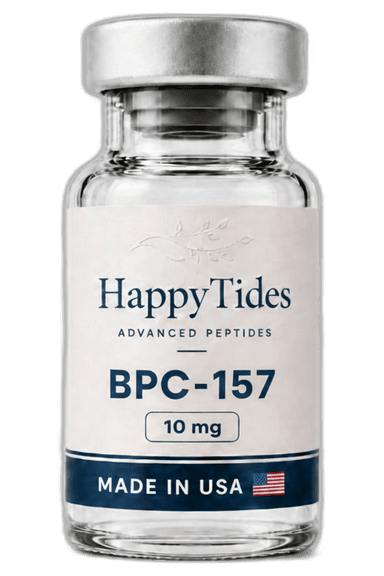
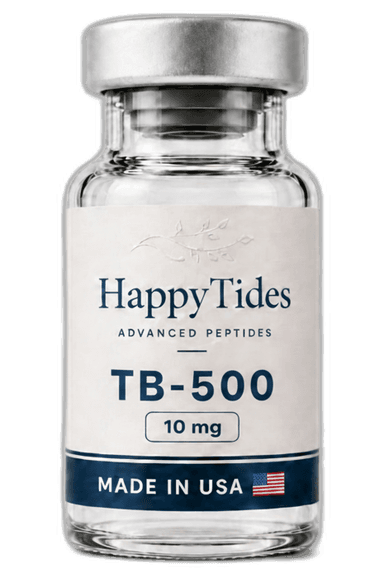
BPC-157 and TB-500 are frequently grouped together in laboratory literature as "healing" or "recovery" research peptides, but at the molecular level they operate through entirely distinct mechanisms. BPC-157 is a synthetic 15-amino-acid (pentadecapeptide) sequence derived from a human gastric juice protein, characterized in cell and isolated-tissue models as a modulator of endothelial and fibroblast signaling that engages vascular endothelial growth factor receptor 2 (VEGFR2) and the nitric oxide (NO) system. TB-500 is a synthetic N-acetylated heptapeptide (Ac-LKKTETQ) corresponding to residues 17-23 of thymosin beta-4, built around the conserved LKKTET actin-binding motif and studied as a receptor-independent regulator of monomeric (G-)actin. This page compares the two strictly on receptor-signaling, sequence, and biochemical grounds drawn from the reference dataset. All statements describe in-vitro and ex-vivo laboratory observations of molecular behavior. Nothing here concerns dosing, administration, clinical efficacy, or any outcome in living subjects, and no comparison of "effectiveness" is implied or possible from this mechanistic framing.
Research use onlyAt a glance
How they line up
| Aspect | BPC-157 | TB-500 |
|---|---|---|
| Peptide class | Synthetic pentadecapeptide (15-aa); cytoprotective/pro-angiogenic research peptide | Synthetic beta-thymosin-derived heptapeptide (N-acetylated actin-binding fragment; WH2-motif) |
| Sequence | Gly-Glu-Pro-Pro-Pro-Gly-Lys-Pro-Ala-Asp-Asp-Ala-Gly-Leu-Val (GEPPPGKPADDAGLV) | Ac-Leu-Lys-Lys-Thr-Glu-Thr-Gln-OH (Ac-LKKTETQ); residues 17-23 of thymosin beta-4 |
| Amino acid count | 15 (pentadecapeptide) | 7 (heptapeptide) |
| Molecular weight | ~1419.5 g/mol (avg ~1419.55) | ~889.0 g/mol free base; acetate salt ~949.1 g/mol |
| Molecular formula | C62H98N16O22 | C38H68N10O14 (free base); acetate salt C40H72N10O16 |
| Origin | Partial sequence derived from human gastric juice protein BPC | Fragment (residues 17-23) of endogenous thymosin beta-4 |
| Primary in-vitro mechanism | Modulates endothelial/fibroblast signaling; VEGFR2 up-regulation + internalization, VEGFR2-Akt-eNOS and Src-Caveolin-1-eNOS / nitric-oxide pathways | Direct G-actin (monomeric actin) sequestration; 1:1 binding, inhibits nucleotide exchange, holds actin polymerization-incompetent |
| Receptor involvement | Receptor-signaling modulator (VEGFR2/eNOS axis); no single cloned receptor | Receptor-independent; binds actin directly via LKKTET motif |
| Relationship to actin | Indirect/downstream: FAK & paxillin phosphorylation promotes F-actin assembly in fibroblasts | Direct: physically sequesters G-actin, buffering the unpolymerized actin pool |
| Representative in-vitro research areas | Angiogenesis signaling (VEGFR2-Akt-eNOS), eNOS/NO regulation via Src-Caveolin-1, tendon-fibroblast cytoskeletal signaling, cytoprotection/oxidative-stress assays | G-actin sequestration assays, F-actin polymerization kinetics, cell-migration models, endothelial tubule-formation, LKKTET/WH2 structure-activity mapping |
- BPC-157
- Synthetic pentadecapeptide (15-aa); cytoprotective/pro-angiogenic research peptide
- TB-500
- Synthetic beta-thymosin-derived heptapeptide (N-acetylated actin-binding fragment; WH2-motif)
- BPC-157
- Gly-Glu-Pro-Pro-Pro-Gly-Lys-Pro-Ala-Asp-Asp-Ala-Gly-Leu-Val (GEPPPGKPADDAGLV)
- TB-500
- Ac-Leu-Lys-Lys-Thr-Glu-Thr-Gln-OH (Ac-LKKTETQ); residues 17-23 of thymosin beta-4
- BPC-157
- 15 (pentadecapeptide)
- TB-500
- 7 (heptapeptide)
- BPC-157
- ~1419.5 g/mol (avg ~1419.55)
- TB-500
- ~889.0 g/mol free base; acetate salt ~949.1 g/mol
- BPC-157
- C62H98N16O22
- TB-500
- C38H68N10O14 (free base); acetate salt C40H72N10O16
- BPC-157
- Partial sequence derived from human gastric juice protein BPC
- TB-500
- Fragment (residues 17-23) of endogenous thymosin beta-4
- BPC-157
- Modulates endothelial/fibroblast signaling; VEGFR2 up-regulation + internalization, VEGFR2-Akt-eNOS and Src-Caveolin-1-eNOS / nitric-oxide pathways
- TB-500
- Direct G-actin (monomeric actin) sequestration; 1:1 binding, inhibits nucleotide exchange, holds actin polymerization-incompetent
- BPC-157
- Receptor-signaling modulator (VEGFR2/eNOS axis); no single cloned receptor
- TB-500
- Receptor-independent; binds actin directly via LKKTET motif
- BPC-157
- Indirect/downstream: FAK & paxillin phosphorylation promotes F-actin assembly in fibroblasts
- TB-500
- Direct: physically sequesters G-actin, buffering the unpolymerized actin pool
- BPC-157
- Angiogenesis signaling (VEGFR2-Akt-eNOS), eNOS/NO regulation via Src-Caveolin-1, tendon-fibroblast cytoskeletal signaling, cytoprotection/oxidative-stress assays
- TB-500
- G-actin sequestration assays, F-actin polymerization kinetics, cell-migration models, endothelial tubule-formation, LKKTET/WH2 structure-activity mapping
The difference
Two molecules, two molecular classes
So one is a mid-sized 15-residue peptide tied to gastric-protein chemistry and angiogenic signaling, while the other is a short 7-residue actin-binding fragment of a much larger parent protein.
The most basic distinction between these peptides is structural. BPC-157 is described in the dataset as a synthetic pentadecapeptide: a 15-amino-acid oligopeptide (sequence GEPPPGKPADDAGLV) representing a partial sequence derived from the human gastric juice protein BPC. Its reported average molecular weight is approximately 1419.5 g/mol with the molecular formula C62H98N16O22. It is classed as a cytoprotective and pro-angiogenic research peptide. TB-500 is a much smaller molecule: a synthetic N-acetylated heptapeptide with the sequence Ac-LKKTETQ, corresponding to residues 17-23 of thymosin beta-4 and containing the conserved LKKTET actin-binding motif characteristic of WH2-domain peptides. Its reported free-base molecular weight is roughly 889.0 g/mol (formula C38H68N10O14), with an acetate salt form near 949.1 g/mol. This class difference (signaling modulator versus cytoskeletal actin-binding fragment) sets up the divergent mechanisms that follow and is the cleanest way to keep the two molecules straight in a laboratory-reference context.
Worth knowing
BPC-157: VEGFR2 and the nitric oxide system
Reported activity spans nanomolar-to-micromolar concentrations in vitro, and review literature frames the broader profile around interaction with the nitric-oxide system.
In the dataset's mechanistic summary, BPC-157 is characterized in cell-based and isolated-tissue models as a modulator of endothelial and fibroblast signaling rather than a ligand for a single cloned receptor. In vascular endothelial cells it is reported to up-regulate VEGFR2 (KDR) at the mRNA and protein level without raising VEGF-A, and to promote VEGFR2 internalization, driving time-dependent activation of the VEGFR2-Akt-eNOS cascade; these effects are described as abolished by the endocytosis inhibitor dynasore. A separate, VEGF-independent route is described as engaging Src kinase-mediated phosphorylation within the Caveolin-1/eNOS complex, releasing endothelial nitric oxide synthase (eNOS) to increase nitric oxide output and modulate vasomotor tone in a nitric-oxide-dependent manner. In tendon fibroblasts, the peptide is reported to increase FAK and paxillin phosphorylation, promote F-actin assembly, and enhance cell spreading and migration. Importantly, in this framework BPC-157 influences actin only indirectly and downstream, through fibroblast signaling cascades (FAK/paxillin) that promote F-actin assembly, not by binding actin directly. Every element here is an in-vitro or ex-vivo receptor-signaling observation.
The difference
TB-500: direct G-actin sequestration
Mutational and NMR mapping studies are cited as localizing the principal actin contacts to electrostatic interactions involving the LKKTET motif lysines and an N-terminal helix.
TB-500 operates on a completely different molecular principle. The dataset describes it as the N-acetylated heptapeptide Ac-LKKTETQ derived from residues 17-23 of thymosin beta-4, encompassing the conserved LKKTET actin-binding motif characteristic of WH2-domain peptides. In cell-free and cultured-cell systems, the parent thymosin beta-4 is described as the principal intracellular G-actin (monomeric actin) sequestering peptide: it binds G-actin in a 1:1 complex (reported Kd in the sub-micromolar to low-micromolar range), inhibits nucleotide exchange, and holds actin in a polymerization-incompetent state, thereby buffering the pool of unpolymerized actin available for filament (F-actin) assembly. At the signaling level, in-vitro models associate this actin-regulatory activity with modulation of cytoskeletal dynamics relevant to endothelial cell migration, tubule formation, and angiogenic sprouting. The dataset frames this explicitly as receptor-independent cytoskeletal and biochemical regulation in laboratory models only. This is the defining contrast with BPC-157: TB-500 acts on actin directly as a binding partner, with no cloned cell-surface receptor in its described mechanism.
Worth knowing
Where the mechanisms converge and diverge
Although the two peptides reach the cytoskeleton and angiogenesis-related readouts from opposite directions, the dataset shows partial overlap in the laboratory phenomena studied.
Both are associated in vitro with endothelial cell migration and angiogenic processes, and both intersect actin dynamics. The divergence is in causation. For BPC-157, the cited angiogenesis link is receptor-mediated and signaling-driven: VEGFR2 up-regulation and internalization, the VEGFR2-Akt-eNOS cascade, and Src-Caveolin-1-eNOS activation feeding nitric oxide output. Its effect on F-actin in fibroblasts is downstream of FAK/paxillin phosphorylation, an indirect, signaling-cascade route. For TB-500, the angiogenesis-relevant activity is attributed directly to the seven-amino-acid actin-binding motif itself: the dataset notes that this motif of thymosin beta-4 is required for angiogenic activity in endothelial cell models, and the molecule's primary action is the physical sequestration of actin monomers. In short, BPC-157 is a signaling modulator that converges on NO/VEGFR2 biology, while TB-500 is a structural actin-binding fragment. The convergence is at the level of observed cellular readouts (migration, tubule formation); the mechanism underneath is distinct. No conclusion about comparative laboratory potency or any biological outcome can be drawn from these mechanistic descriptions, which are model-system observations only.
Straight answers
Frequently asked questions
What is the core mechanistic difference between BPC-157 and TB-500?
In the reference dataset, BPC-157 is described as a signaling modulator: in endothelial and fibroblast cell models it up-regulates and internalizes VEGFR2, activates the VEGFR2-Akt-eNOS cascade, and engages a Src-Caveolin-1-eNOS route tied to the nitric oxide system. TB-500 is described as a direct actin-binding peptide: through its LKKTET motif it sequesters monomeric G-actin in a 1:1 complex and holds it in a polymerization-incompetent state. One acts through receptor-signaling pathways; the other acts directly on a cytoskeletal protein. These are in-vitro and ex-vivo mechanistic descriptions only.
Do BPC-157 and TB-500 both bind a cell-surface receptor?
Not in the same way. The dataset frames BPC-157 as a modulator of endothelial and fibroblast signaling that acts on the VEGFR2/eNOS axis rather than on a single cloned receptor. TB-500 is described as receptor-independent: its mechanism is the direct biochemical sequestration of G-actin via the conserved LKKTET actin-binding motif, with the principal contacts mapped by mutational and NMR studies to electrostatic interactions involving the motif lysines and an N-terminal helix. Neither description involves a dedicated TB-500 cell-surface receptor.
How do the two peptides differ in size and structure?
BPC-157 is a 15-amino-acid pentadecapeptide (sequence GEPPPGKPADDAGLV) with a reported molecular weight near 1419.5 g/mol and the formula C62H98N16O22. TB-500 is a 7-amino-acid N-acetylated heptapeptide (Ac-LKKTETQ) corresponding to residues 17-23 of thymosin beta-4, with a free-base molecular weight near 889.0 g/mol (formula C38H68N10O14) and an acetate salt form near 949.1 g/mol. TB-500 is the smaller molecule and is a fragment of a larger parent protein, whereas BPC-157 derives from a human gastric juice protein sequence.
Why are both described as relevant to angiogenesis in laboratory models if their mechanisms differ?
Both intersect angiogenesis-related cellular readouts in vitro, but by different routes. For BPC-157, the dataset attributes the angiogenic association to receptor-signaling: VEGFR2 up-regulation and internalization and the downstream Akt-eNOS pathway, plus nitric-oxide-system interaction. For TB-500, the dataset notes that the seven-amino-acid actin-binding motif of thymosin beta-4 is required for angiogenic activity in endothelial cell models, tying the effect directly to actin regulation. The shared readout (endothelial migration, tubule formation) sits on top of distinct molecular mechanisms.
Does the dataset support comparing which peptide works better?
No. The reference material describes molecular mechanisms, sequences, and in-vitro or ex-vivo receptor-signaling observations only. It contains no head-to-head laboratory potency comparison and no outcome data, so any claim that one peptide is more effective than the other would go beyond what the dataset supports. The appropriate comparison is mechanistic: signaling modulation through the VEGFR2/eNOS axis (BPC-157) versus direct G-actin sequestration (TB-500).
For in-vitro laboratory research use only. Not for human or animal consumption. Comparisons are on molecular and receptor-signaling grounds only and do not describe or imply human outcomes or efficacy. Not evaluated by the FDA.