
CJC-1295 vs Sermorelin
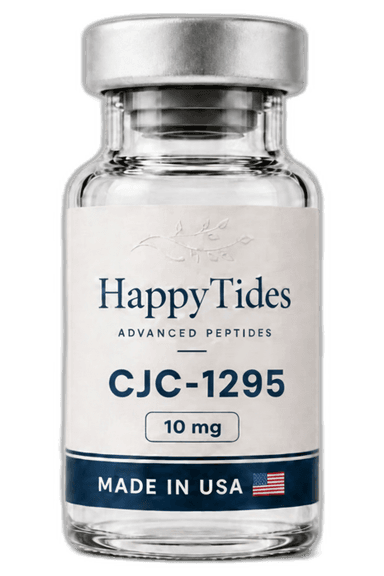
CJC-1295 without DAC (Mod GRF 1-29) and sermorelin are both synthetic growth hormone-releasing hormone (GHRH) analogs built on the 29-residue GHRH(1-29) framework, and both act as agonists at the GHRH receptor (GHRHR), a class B Gs-coupled G-protein-coupled receptor expressed on pituitary somatotroph cells in laboratory models. The molecules diverge principally in primary sequence and the resulting in-vitro metabolic stability: sermorelin reproduces the native human GHRH(1-29) sequence and is rapidly cleaved by dipeptidyl peptidase-IV (DPP-IV), while CJC-1295 without DAC carries four engineered substitutions, the most consequential of which (D-Ala at position 2) confers DPP-IV resistance. This reference compares the two strictly on molecular, structural, and receptor-signaling grounds as documented in the underlying dataset. It is intended for in-vitro and laboratory-research contexts only and makes no statement about clinical use, physiological outcomes, or efficacy of any kind.
Research use onlyAt a glance
How they line up
| Aspect | CJC-1295 without DAC | Sermorelin |
|---|---|---|
| Peptide class | Synthetic GHRH/GRF analog; tetrasubstituted GHRH(1-29) amide; GHRHR agonist (GH secretagogue class) | GHRH receptor agonist / GH secretagogue; 29-amino-acid GHRH analogue |
| Sequence basis | GHRH(1-29) backbone with substitutions D-Ala2, Gln8, Ala15, Leu27; C-terminal amide | Native human GHRH(1-29): YADAIFTNSYRKVLGQLSARKLLQDIMSR-NH2; C-terminal amide |
| Molecular formula | C152H252N44O42 | C149H246N44O42S |
| Average molecular weight | ~3367.9 g/mol | 3357.93 g/mol (free base) |
| Receptor target | GHRHR (class B Gs-coupled GPCR on somatotrophs) | GHRHR (class B Gs-coupled GPCR on somatotrophs) |
| Signaling cascade (in vitro) | Gs / adenylyl cyclase / cAMP / PKA; downstream Ca2+ influx in somatotroph models | Gs / adenylyl cyclase / cAMP / PKA / CREB; Ca2+-dependent granule exocytosis |
| DPP-IV stability | D-Ala2 substitution confers DPP-IV resistance; lowered metabolic clearance vs unmodified peptide | Rapidly cleaved by DPP-IV at the Tyr1-Ala2 bond; short plasma half-life (~minutes) |
| Albumin-binding / DAC moiety | None (no-DAC form lacks the maleimidopropionyl-Lys30 extension); no covalent albumin bioconjugate; comparatively short receptor-occupancy kinetics | None; no albumin-binding modification |
| CAS Registry Number | 863288-34-0 | 86168-78-7 (free base); 114466-38-5 (acetate) |
- CJC-1295 without DAC
- Synthetic GHRH/GRF analog; tetrasubstituted GHRH(1-29) amide; GHRHR agonist (GH secretagogue class)
- Sermorelin
- GHRH receptor agonist / GH secretagogue; 29-amino-acid GHRH analogue
- CJC-1295 without DAC
- GHRH(1-29) backbone with substitutions D-Ala2, Gln8, Ala15, Leu27; C-terminal amide
- Sermorelin
- Native human GHRH(1-29): YADAIFTNSYRKVLGQLSARKLLQDIMSR-NH2; C-terminal amide
- CJC-1295 without DAC
- C152H252N44O42
- Sermorelin
- C149H246N44O42S
- CJC-1295 without DAC
- ~3367.9 g/mol
- Sermorelin
- 3357.93 g/mol (free base)
- CJC-1295 without DAC
- GHRHR (class B Gs-coupled GPCR on somatotrophs)
- Sermorelin
- GHRHR (class B Gs-coupled GPCR on somatotrophs)
- CJC-1295 without DAC
- Gs / adenylyl cyclase / cAMP / PKA; downstream Ca2+ influx in somatotroph models
- Sermorelin
- Gs / adenylyl cyclase / cAMP / PKA / CREB; Ca2+-dependent granule exocytosis
- CJC-1295 without DAC
- D-Ala2 substitution confers DPP-IV resistance; lowered metabolic clearance vs unmodified peptide
- Sermorelin
- Rapidly cleaved by DPP-IV at the Tyr1-Ala2 bond; short plasma half-life (~minutes)
- CJC-1295 without DAC
- None (no-DAC form lacks the maleimidopropionyl-Lys30 extension); no covalent albumin bioconjugate; comparatively short receptor-occupancy kinetics
- Sermorelin
- None; no albumin-binding modification
- CJC-1295 without DAC
- 863288-34-0
- Sermorelin
- 86168-78-7 (free base); 114466-38-5 (acetate)
The difference
Shared GHRH-analog architecture and receptor target
Each is a 29-residue construct based on the N-terminal 1-29 fragment of human GHRH and carries a C-terminal amide, a feature the dataset notes as required for receptor potency in the sermorelin entry.
Both peptides belong to the GHRH/GRF analog class and share the same molecular target in receptor-binding studies: the growth hormone-releasing hormone receptor (GHRHR), a class B secretin-family G-protein-coupled receptor on anterior-pituitary somatotroph cells. In cell-based and receptor-level systems, agonist occupancy of GHRHR couples through the stimulatory G-protein (Gs) to activate adenylyl cyclase, raising intracellular cAMP and engaging protein kinase A (PKA) signaling. Sermorelin reproduces the native human GHRH(1-29) sequence (YADAIFTNSYRKVLGQLSARKLLQDIMSR-NH2) and is described as the shortest fragment retaining full GHRH activity at the receptor. CJC-1295 without DAC, also called Mod GRF 1-29, is a tetrasubstituted GHRH(1-29) amide. Because both signal through the same native receptor pathway, their comparison is most meaningful at the level of sequence chemistry and the in-vitro stability that sequence produces, rather than at the level of receptor identity, which they hold in common.
Worth knowing
Sequence substitutions and molecular composition
The substitution at position 2 replaces the L-alanine of the native Tyr1-Ala2 N-terminus with D-alanine, altering the stereochemistry at the exact bond that governs proteolytic recognition.
The two molecules differ in primary sequence and, consequently, in molecular formula and mass. Sermorelin has the formula C149H246N44O42S and an average molecular weight of 3357.93 g/mol; its retention of methionine accounts for the single sulfur atom in its formula. CJC-1295 without DAC has the formula C152H252N44O42 and an average molecular weight of approximately 3367.9 g/mol, with no sulfur, reflecting its four substitutions relative to native GRF(1-29): D-Ala at position 2, Gln at position 8, Ala at position 15, and Leu at position 27. Per the dataset, these substitutions are placed at metabolically labile or oxidation-prone sites within the backbone. Sermorelin, by contrast, preserves the native Tyr1-Ala2 sequence. Both peptides terminate in a C-terminal amide. These are the load-bearing structural distinctions between the two analogs and the basis for their differing behavior in metabolic-stability assays described below.
The difference
Stability, DPP-IV resistance, and half-life determinants
The sermorelin entry states that the molecule is rapidly cleaved by dipeptidyl peptidase-IV (DPP-IV) at the Tyr1-Ala2 bond, giving a short plasma half-life reported on the order of minutes.
The clearest mechanistic separation between the two molecules concerns in-vitro and ex-vivo metabolic stability. This cleavage at the native N-terminus is the principal route of inactivation for unmodified GHRH(1-29). CJC-1295 without DAC addresses this directly through its D-Ala2 substitution, which the dataset states confers resistance to DPP-IV cleavage and lowers the metabolic clearance rate relative to the unmodified peptide. As a general peptide-science principle, substituting a D-amino acid at a protease recognition site is a standard strategy for impeding exopeptidase cleavage, and that is the mechanism the dataset attributes to the D-Ala2 modification here. A second, separate stability axis is the DAC (drug-affinity-complex) albumin-binding extension. The no-DAC form explicitly lacks the C-terminal maleimidopropionyl-Lys30 albumin-binding extension present in the DAC variant, so it does not form covalent serum-albumin bioconjugates and shows comparatively short receptor-occupancy kinetics in experimental models. Sermorelin likewise carries no albumin-binding moiety. Thus the stability gap between these two specific molecules derives from the D-Ala2 backbone modification rather than from albumin tethering.
Worth knowing
Signaling cascade and feedback context in model systems
Downstream of GHRHR engagement, the two analogs are described as driving the same canonical cascade in somatotroph cell models.
For sermorelin, the dataset specifies Gs coupling, adenylyl-cyclase activation, raised intracellular cAMP, PKA engagement, and downstream CREB-mediated transcription, together with Ca2+-dependent exocytosis of stored secretory granules in cultured somatotrophs. The sermorelin entry further notes that because signaling occurs through the native receptor, secretory output in model systems remains pulsatile and subject to somatostatin (SSTR) counter-regulation and IGF-1 negative feedback, rather than bypassing those control loops. For CJC-1295 without DAC, the dataset describes Gs-coupled adenylyl cyclase activation, raised cAMP, and PKA signaling, associated in model systems with downstream calcium influx and somatotroph signaling consistent with GH-axis activation. The two therefore converge on an essentially shared second-messenger readout, with the practical experimental difference lying in receptor-occupancy duration: CJC-1295 without DAC, by resisting DPP-IV cleavage, persists longer in stability assays than DPP-IV-labile sermorelin, while remaining short-acting relative to the albumin-tethered DAC variant. All statements here describe in-vitro receptor coupling and laboratory-model signaling behavior only.
Straight answers
Frequently asked questions
Are CJC-1295 without DAC and sermorelin both GHRH analogs?
Yes. Both are synthetic analogs built on the 29-residue GHRH(1-29) framework and both act as agonists at the GHRH receptor (GHRHR), a class B Gs-coupled G-protein-coupled receptor on pituitary somatotroph cells in laboratory models. Sermorelin reproduces the native human GHRH(1-29) sequence, while CJC-1295 without DAC is a tetrasubstituted version of that same backbone.
What is the main structural difference between the two peptides?
Sermorelin has the native GHRH(1-29) sequence (formula C149H246N44O42S, ~3357.93 g/mol). CJC-1295 without DAC carries four substitutions relative to native GRF(1-29) - D-Ala2, Gln8, Ala15, and Leu27 - giving formula C152H252N44O42 (~3367.9 g/mol). Both terminate in a C-terminal amide.
Why is CJC-1295 without DAC more stable than sermorelin in metabolic-stability assays?
Per the dataset, sermorelin is rapidly cleaved by dipeptidyl peptidase-IV (DPP-IV) at the Tyr1-Ala2 bond, giving a short half-life on the order of minutes. CJC-1295 without DAC replaces the residue at position 2 with D-alanine, which confers DPP-IV resistance and lowers the metabolic clearance rate. As a general peptide-science principle, a D-amino acid at a protease recognition site impedes exopeptidase cleavage.
Does the 'no-DAC' designation affect half-life?
Yes, separately from the DPP-IV question. The no-DAC form lacks the C-terminal maleimidopropionyl-Lys30 albumin-binding extension present in the DAC variant, so it does not form covalent serum-albumin bioconjugates and shows comparatively short receptor-occupancy kinetics in experimental models. Sermorelin similarly carries no albumin-binding moiety, so the stability gap between these two specific molecules comes from the D-Ala2 backbone change, not from albumin tethering.
Do the two peptides signal through different pathways?
No. In cell-based and receptor-level systems both engage GHRHR and couple through Gs to activate adenylyl cyclase, raising intracellular cAMP and engaging PKA signaling. The sermorelin entry additionally describes downstream CREB-mediated transcription and Ca2+-dependent secretory-granule exocytosis. The molecules converge on essentially the same second-messenger readout, differing mainly in in-vitro receptor-occupancy duration.
Is this comparison a statement about clinical use?
No. Every statement here describes in-vitro receptor coupling, molecular composition, and laboratory-model signaling behavior only, drawn from the reference dataset. Nothing on this page addresses human use, physiological outcomes, dosing, or efficacy of any kind.
Go to the source
Read the full references
For in-vitro laboratory research use only. Not for human or animal consumption. Comparisons are on molecular and receptor-signaling grounds only and do not describe or imply human outcomes or efficacy. Not evaluated by the FDA.