
Growth Hormone Secretagogues Compared
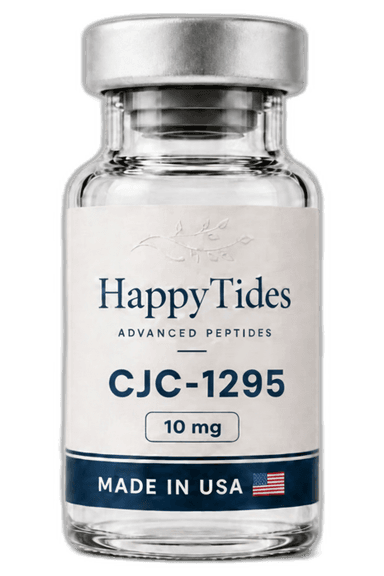
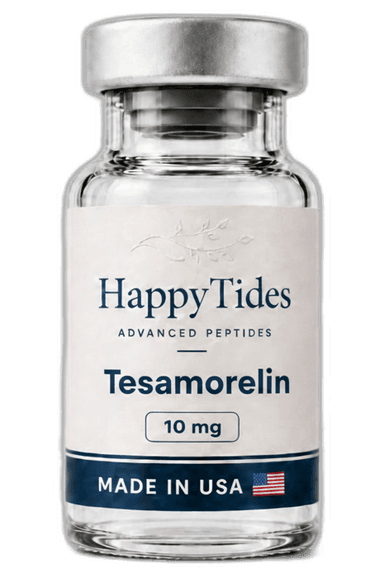
Growth hormone secretagogues are research peptides studied for their ability to engage the receptor machinery that governs somatotroph signaling in laboratory models. This reference compares five of them on strictly molecular and receptor-signaling grounds: CJC-1295 without DAC, CJC-1295 with DAC, sermorelin, tesamorelin, and GHRP-2. The first four belong to the growth hormone-releasing hormone (GHRH/GRF) analog family and act at the GHRH receptor (GHRHR), a class B Gs-coupled G-protein-coupled receptor expressed on pituitary somatotroph cells. GHRP-2 belongs to a separate pharmacological class: it is a synthetic hexapeptide that engages the growth hormone secretagogue receptor type 1a (GHS-R1a), the ghrelin receptor, through a different G-protein and second-messenger route. The comparison below is organized around receptor identity, the intracellular signal-transduction cascade each peptide triggers, the structural modifications that distinguish the GHRH analogs from one another, and the molecular descriptors recorded in the dataset. All statements describe in-vitro and receptor-level characterizations only. Nothing here concerns human use, dosing, or physiological outcomes; the intent is to map how these molecules differ at the level of receptor coupling and peptide chemistry as documented in the cited mechanistic literature.
Research use onlyAt a glance
How they line up
| Aspect | CJC-1295 without DAC | CJC-1295 with DAC | Sermorelin | Tesamorelin | GHRP-2 |
|---|---|---|---|---|---|
| Peptide class | Tetrasubstituted GHRH(1-29) amide; GHRH-receptor agonist (no albumin extension) | GHRH/GRF analog with albumin-binding Drug Affinity Complex (DAC); long-acting secretagogue | GHRH(1-29) fragment; GHRH-receptor agonist (native, unmodified) | N-terminally lipid-modified full-length GHRH(1-44) analog; GHRHR agonist | Synthetic hexapeptide growth hormone secretagogue; ghrelin-receptor (GHS-R1a) agonist |
| Receptor target | GHRH receptor (GHRHR), class B Gs-coupled GPCR on somatotrophs | GHRH receptor (GHRHR), class B Gs-coupled GPCR on somatotrophs | GHRH receptor (GHRHR), class B Gs-coupled GPCR on somatotrophs | GHRH receptor (GHRHR), class B Gs-coupled GPCR on somatotrophs | GHS-R1a (ghrelin receptor), class A Gq/11-coupled GPCR |
| Second-messenger cascade | Gs / adenylyl cyclase / cAMP / PKA (with downstream Ca2+ in models) | Gs / adenylate cyclase / cAMP / PKA / CREB / Pit-1; increased intracellular Ca2+ | Gs / cAMP / PKA / CREB; Ca2+-dependent granule exocytosis | Gs / adenylyl cyclase / cAMP / PKA / CREB | Gq/11 / phospholipase C / IP3-DAG / intracellular Ca2+ / PKC (PKA contribution in some models) |
| Backbone / key modifications | GRF(1-29) with D-Ala2, Gln8, Ala15, Leu27; no albumin linker | GRF(1-29) with D-Ala2, Gln8, Ala15, Leu27 + C-terminal Lys30 Nε-maleimidopropionyl DAC linker | Native human GHRH residues 1-29; no substitutions; Arg29 amidated | Full native GHRH(1-44) with trans-3-hexenoyl group on Tyr1; C-terminal amide | D-Ala-D-2-Nal-Ala-Trp-D-Phe-Lys-NH2 (hexapeptide) |
| Stability / metabolic feature | D-Ala2 confers DPP-IV resistance; short receptor-occupancy kinetics (no albumin binding) | Substitutions give DPP-IV resistance; maleimide-Cys34 albumin conjugation extends plasma residence | Rapid DPP-IV cleavage at Tyr1-Ala2; short half-life (~minutes) | N-terminal hexenoyl acylation confers DPP-4 resistance | Non-coded D-amino acids and 2-naphthyl residue; receptor specificity confirmed by [D-Lys3]-GHRP-6 blockade |
| Molecular formula | C152H252N44O42 | C165H269N47O46 (pre-conjugation DAC molecule) | C149H246N44O42S | C221H366N72O67S | C45H55N9O6 |
| Molecular weight | ~3367.9 g/mol | ~3647 g/mol (free DAC peptide); ~70 kDa once albumin-conjugated | 3357.93 g/mol (free base) | 5135.9 g/mol (~5136 Da) | 817.99 g/mol (free base) |
| Representative research areas | GHRHR binding/agonist pharmacology; Gs/cAMP/PKA signaling; DPP-IV-resistance assays; DAC vs no-DAC occupancy kinetics | GHRHR Gs/cAMP signaling; maleimide-to-albumin-Cys34 bioconjugation chemistry; DAC half-life-extension PK | GHRHR Gs-cAMP-PKA signaling; somatotroph secretory dynamics; DPP-IV cleavage kinetics; GHRH vs GHS-R comparison | GHRHR agonist pharmacology; CREB/GH-gene transcription; DPP-4 stability of N-acylated analogs | GHS-R1a binding/agonist pharmacology; Gq/11-PLC-IP3/DAG/Ca2+/PKC signaling; antagonist-blockade specificity |
- CJC-1295 without DAC
- Tetrasubstituted GHRH(1-29) amide; GHRH-receptor agonist (no albumin extension)
- CJC-1295 with DAC
- GHRH/GRF analog with albumin-binding Drug Affinity Complex (DAC); long-acting secretagogue
- Sermorelin
- GHRH(1-29) fragment; GHRH-receptor agonist (native, unmodified)
- Tesamorelin
- N-terminally lipid-modified full-length GHRH(1-44) analog; GHRHR agonist
- GHRP-2
- Synthetic hexapeptide growth hormone secretagogue; ghrelin-receptor (GHS-R1a) agonist
- CJC-1295 without DAC
- GHRH receptor (GHRHR), class B Gs-coupled GPCR on somatotrophs
- CJC-1295 with DAC
- GHRH receptor (GHRHR), class B Gs-coupled GPCR on somatotrophs
- Sermorelin
- GHRH receptor (GHRHR), class B Gs-coupled GPCR on somatotrophs
- Tesamorelin
- GHRH receptor (GHRHR), class B Gs-coupled GPCR on somatotrophs
- GHRP-2
- GHS-R1a (ghrelin receptor), class A Gq/11-coupled GPCR
- CJC-1295 without DAC
- Gs / adenylyl cyclase / cAMP / PKA (with downstream Ca2+ in models)
- CJC-1295 with DAC
- Gs / adenylate cyclase / cAMP / PKA / CREB / Pit-1; increased intracellular Ca2+
- Sermorelin
- Gs / cAMP / PKA / CREB; Ca2+-dependent granule exocytosis
- Tesamorelin
- Gs / adenylyl cyclase / cAMP / PKA / CREB
- GHRP-2
- Gq/11 / phospholipase C / IP3-DAG / intracellular Ca2+ / PKC (PKA contribution in some models)
- CJC-1295 without DAC
- GRF(1-29) with D-Ala2, Gln8, Ala15, Leu27; no albumin linker
- CJC-1295 with DAC
- GRF(1-29) with D-Ala2, Gln8, Ala15, Leu27 + C-terminal Lys30 Nε-maleimidopropionyl DAC linker
- Sermorelin
- Native human GHRH residues 1-29; no substitutions; Arg29 amidated
- Tesamorelin
- Full native GHRH(1-44) with trans-3-hexenoyl group on Tyr1; C-terminal amide
- GHRP-2
- D-Ala-D-2-Nal-Ala-Trp-D-Phe-Lys-NH2 (hexapeptide)
- CJC-1295 without DAC
- D-Ala2 confers DPP-IV resistance; short receptor-occupancy kinetics (no albumin binding)
- CJC-1295 with DAC
- Substitutions give DPP-IV resistance; maleimide-Cys34 albumin conjugation extends plasma residence
- Sermorelin
- Rapid DPP-IV cleavage at Tyr1-Ala2; short half-life (~minutes)
- Tesamorelin
- N-terminal hexenoyl acylation confers DPP-4 resistance
- GHRP-2
- Non-coded D-amino acids and 2-naphthyl residue; receptor specificity confirmed by [D-Lys3]-GHRP-6 blockade
- CJC-1295 without DAC
- C152H252N44O42
- CJC-1295 with DAC
- C165H269N47O46 (pre-conjugation DAC molecule)
- Sermorelin
- C149H246N44O42S
- Tesamorelin
- C221H366N72O67S
- GHRP-2
- C45H55N9O6
- CJC-1295 without DAC
- ~3367.9 g/mol
- CJC-1295 with DAC
- ~3647 g/mol (free DAC peptide); ~70 kDa once albumin-conjugated
- Sermorelin
- 3357.93 g/mol (free base)
- Tesamorelin
- 5135.9 g/mol (~5136 Da)
- GHRP-2
- 817.99 g/mol (free base)
- CJC-1295 without DAC
- GHRHR binding/agonist pharmacology; Gs/cAMP/PKA signaling; DPP-IV-resistance assays; DAC vs no-DAC occupancy kinetics
- CJC-1295 with DAC
- GHRHR Gs/cAMP signaling; maleimide-to-albumin-Cys34 bioconjugation chemistry; DAC half-life-extension PK
- Sermorelin
- GHRHR Gs-cAMP-PKA signaling; somatotroph secretory dynamics; DPP-IV cleavage kinetics; GHRH vs GHS-R comparison
- Tesamorelin
- GHRHR agonist pharmacology; CREB/GH-gene transcription; DPP-4 stability of N-acylated analogs
- GHRP-2
- GHS-R1a binding/agonist pharmacology; Gq/11-PLC-IP3/DAG/Ca2+/PKC signaling; antagonist-blockade specificity
The difference
Two receptor classes: GHRHR agonists versus a ghrelin-receptor agonist
It is a synthetic hexapeptide that acts as a potent agonist of the growth hormone secretagogue receptor type 1a (GHS-R1a), the same class A GPCR that binds endogenous ghrelin.
The central mechanistic divide among these five peptides is which receptor they engage. CJC-1295 (both the no-DAC and DAC forms), sermorelin, and tesamorelin are GHRH-family analogs that act as agonists at the GHRH receptor (GHRHR), a class B secretin-family G-protein-coupled receptor on anterior-pituitary somatotrophs. In receptor-level studies, ligand binding couples GHRHR to the stimulatory Gs protein, which activates adenylyl cyclase, raises intracellular cyclic AMP, and engages protein kinase A; PKA in turn phosphorylates the CREB transcription factor and, in the case described for several of these analogs, modulates growth-hormone gene transcription alongside calcium-dependent secretory-granule mobilization. GHRP-2 occupies a structurally and pharmacologically distinct position. Rather than the Gs/cAMP route, GHS-R1a engagement couples predominantly to Gq/11, activating phospholipase C and generating inositol-1,4,5-trisphosphate and diacylglycerol, which mobilizes intracellular calcium and activates protein kinase C, with reported contributions from the cAMP axis in some pituitary models. Receptor specificity for GHRP-2 is supported by blockade with the GHS-R1a antagonist [D-Lys3]-GHRP-6 in myocyte models. The two classes therefore converge on somatotroph secretion in model systems by way of entirely separate receptors and second-messenger cascades.
Worth knowing
Sermorelin and tesamorelin: native GHRH backbones, different lengths and stability strategies
Tesamorelin retains the full-length native GHRH(1-44) backbone and adds a trans-3-hexenoyl (3-hexenoic acid) group on the alpha-amino group of the N-terminal tyrosine, with C-terminal amidation.
Sermorelin and tesamorelin are both built directly on the native human GHRH sequence, but they differ in length and in how they resist enzymatic degradation. Sermorelin is the N-terminal 1-29 fragment of human GHRH, the shortest fragment reported to retain full intrinsic GHRH activity at the receptor; its sequence is YADAIFTNSYRKVLGQLSARKLLQDIMSR-NH2, with C-terminal amidation required for receptor potency. Because it carries no protective substitutions, sermorelin is rapidly cleaved by dipeptidyl peptidase-IV at the Tyr1-Ala2 bond, giving a short plasma half-life on the order of minutes. That N-terminal lipid acylation confers resistance to the same DPP-4 cleavage that inactivates native GHRH, prolonging molecular stability while preserving the receptor-binding determinants. Both signal through the canonical GHRHR Gs/cAMP/PKA/CREB cascade. Their molecular descriptors reflect the length difference: sermorelin is C149H246N44O42S at 3357.93 g/mol, while tesamorelin, carrying the additional 15 residues plus the acyl modification, is C221H366N72O67S at 5135.9 g/mol. The contrast illustrates two distinct structural routes to the same receptor target: truncation to the minimal active fragment versus full-length retention with an N-terminal stability cap.
The difference
CJC-1295 no-DAC versus with DAC: the albumin-binding distinction
The pre-conjugation DAC peptide is C165H269N47O46 at roughly 3647 g/mol; after covalent conjugation to albumin the effective circulating mass rises to approximately 70 kDa.
The two CJC-1295 forms share an identical peptide backbone: GRF(1-29) carrying four substitutions relative to native GRF(1-29), namely D-Ala2, Gln8, Ala15, and Leu27. These substitutions sit at metabolically labile or oxidation-prone sites, and the D-Ala2 change in particular confers resistance to dipeptidyl peptidase-IV cleavage, lowering in-vitro metabolic clearance relative to the unmodified peptide. Both forms act as GHRHR agonists driving the Gs/adenylyl cyclase/cAMP/PKA/CREB cascade in somatotroph models. The defining difference is the Drug Affinity Complex (DAC). The no-DAC form (Mod GRF 1-29) lacks any albumin-binding extension; it is C152H252N44O42 at about 3367.9 g/mol and exhibits comparatively short receptor-occupancy kinetics in experimental models because it does not form covalent serum bioconjugates. The DAC form adds a C-terminal Lys30 bearing an Nε-maleimidopropionyl linker. That maleimide reacts selectively with the free thiol of cysteine-34 on serum albumin to form a stable thioether bioconjugate at 1:1 loading, the molecular basis for extended plasma residence in pharmacokinetic studies. In short: same backbone, same receptor, with the DAC variant adding site-selective albumin tethering and the no-DAC variant remaining a free, shorter-residence ligand.
Worth knowing
Signal-transduction summary and structure-activity themes
GHRP-2 instead drives GHS-R1a-Gq/11-phospholipase C-IP3/DAG-calcium/PKC, a parallel route into somatotroph secretory-granule exocytosis.
Across these five peptides, two signaling logics emerge. The four GHRH analogs (CJC-1295 no-DAC, CJC-1295 DAC, sermorelin, tesamorelin) all funnel through GHRHR-Gs-adenylyl cyclase-cAMP-PKA, with PKA-driven CREB phosphorylation described as part of the growth-hormone gene transcription readout in somatotroph models. Because they act through the native receptor, model-system descriptions note that output remains pulsatile and subject to somatostatin counter-regulation and IGF-1 feedback rather than bypassing these control loops. The structure-activity themes that distinguish the GHRH analogs are largely about stability and residence time: sermorelin is the unmodified minimal fragment and the most rapidly DPP-IV-cleaved; the CJC-1295 backbone substitutions (notably D-Ala2) add proteolytic resistance; tesamorelin uses N-terminal hexenoyl acylation for DPP-4 resistance on a full-length backbone; and the CJC-1295 DAC linker adds albumin conjugation for extended residence on top of the substitution-based stability. Comparative receptor-occupancy kinetics of DAC versus no-DAC GHRH analogs and comparative pharmacology of GHRH analogs versus GHS-R secretagogues are themselves noted research areas in the dataset, underscoring that these molecules are studied side-by-side precisely on these receptor-signaling and stability grounds.
Straight answers
Frequently asked questions
What is the core mechanistic difference between the GHRH analogs and GHRP-2?
The GHRH analogs in this comparison (CJC-1295 no-DAC, CJC-1295 DAC, sermorelin, tesamorelin) act as agonists at the GHRH receptor (GHRHR), a class B Gs-coupled GPCR, signaling through adenylyl cyclase, cAMP, and PKA. GHRP-2 instead agonizes the GHS-R1a ghrelin receptor, a class A GPCR that couples predominantly to Gq/11, phospholipase C, IP3/DAG, intracellular calcium, and protein kinase C. They are different receptor classes with different second-messenger routes.
How does CJC-1295 with DAC differ from CJC-1295 without DAC at the molecular level?
Both share the same GRF(1-29) backbone with four substitutions (D-Ala2, Gln8, Ala15, Leu27) and act at the GHRHR. The DAC form adds a C-terminal Lys30 carrying an Nε-maleimidopropionyl linker that reacts selectively with cysteine-34 of serum albumin to form a stable 1:1 thioether bioconjugate, which is the basis for its extended plasma residence. The no-DAC form lacks this albumin-binding extension and shows comparatively short receptor-occupancy kinetics in models.
Why is sermorelin described as having a short half-life relative to the other GHRH analogs?
Sermorelin is the unmodified native GHRH(1-29) fragment. Because it carries no stabilizing substitutions or acyl modifications, it is rapidly cleaved by dipeptidyl peptidase-IV at the Tyr1-Ala2 bond, giving a plasma half-life reported on the order of minutes. By contrast, the CJC-1295 backbone uses substitutions such as D-Ala2 for DPP-IV resistance, and tesamorelin uses an N-terminal hexenoyl acylation for DPP-4 resistance.
What distinguishes tesamorelin structurally from sermorelin?
Sermorelin is the GHRH(1-29) fragment, the shortest segment reported to retain full GHRH activity. Tesamorelin retains the full-length native GHRH(1-44) sequence and adds a trans-3-hexenoyl group on the alpha-amino group of its N-terminal tyrosine, with C-terminal amidation. That lipid modification confers resistance to DPP-4 cleavage while preserving receptor-binding determinants. The length and acylation difference is reflected in their molecular descriptors: 3357.93 g/mol for sermorelin versus 5135.9 g/mol for tesamorelin.
Do these peptides bypass normal somatotroph regulatory feedback in model systems?
According to the dataset descriptions, the GHRH analogs signal through the native GHRHR, so in model systems their output remains pulsatile and subject to somatostatin counter-regulation and IGF-1 negative feedback rather than bypassing these control loops. GHRP-2 acts through a separate receptor (GHS-R1a) but is likewise characterized at the level of receptor binding and intracellular signal transduction. These are mechanistic, in-vitro and model-system observations only.
Which molecular descriptors separate the smallest and largest peptides here?
GHRP-2 is the smallest, a hexapeptide at 817.99 g/mol with formula C45H55N9O6. Tesamorelin is the largest, the full-length GHRH(1-44) analog at 5135.9 g/mol with formula C221H366N72O67S. The GHRH(1-29)-based molecules fall in between: sermorelin at 3357.93 g/mol, CJC-1295 no-DAC at about 3367.9 g/mol, and the CJC-1295 DAC peptide at roughly 3647 g/mol before albumin conjugation.
Go to the source
Read the full references
For in-vitro laboratory research use only. Not for human or animal consumption. Comparisons are on molecular and receptor-signaling grounds only and do not describe or imply human outcomes or efficacy. Not evaluated by the FDA.