
CJC-1295 No-DAC vs With-DAC
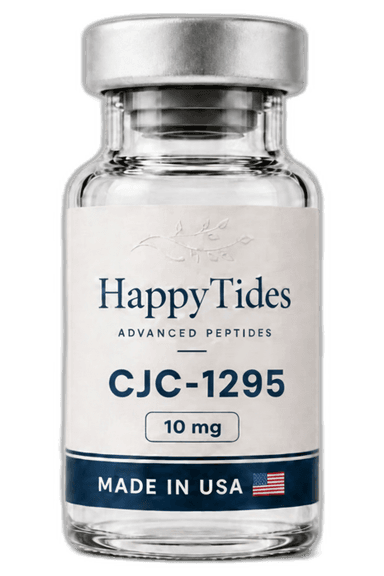
CJC-1295 exists in two laboratory forms built on the same growth-hormone-releasing-hormone backbone: a "no-DAC" tetrasubstituted GHRH(1-29) amide (Mod GRF 1-29) and a "with-DAC" variant carrying a Drug Affinity Complex albumin-binding linker. Both are research-grade GHRH-receptor (GHRHR) agonists used as reference compounds in receptor-signaling and peptide-stability studies. The single structural difference between them - the presence or absence of an Nε-maleimidopropionyl extension on a C-terminal lysine - governs how each behaves at the molecular level: how long it occupies the receptor system, how it persists against proteolysis, and how that translates into the tempo of secretagogue signaling in model systems. This page compares the two strictly on molecular and receptor-signaling grounds, drawing only on the dataset records for each entry. No human use, dosing, or outcome claims are made or implied; the comparison concerns the DAC modification, in-vitro/ex-vivo half-life behavior, and the pulsatility characteristics observed in laboratory and physiological-model contexts.
Research use onlyAt a glance
How they line up
| Aspect | CJC-1295 without DAC | CJC-1295 with DAC |
|---|---|---|
| Form / class | Tetrasubstituted GHRH(1-29) amide; GHRH-receptor agonist (no albumin linker) | Albumin-binding (DAC) long-acting GHRH/GRF secretagogue analog |
| Backbone substitutions | D-Ala2, Gln8, Ala15, Leu27 on GRF(1-29) | D-Ala2, Gln8, Ala15, Leu27 on GRF(1-29) (identical core) |
| DAC / albumin-binding element | Absent - lacks the Nε-maleimidopropionyl-Lys30 extension | Present - C-terminal Lys30 Nε-maleimidopropionyl linker forming a thioether to albumin Cys34 (1:1) |
| Molecular formula | C152H252N44O42 | C165H269N47O46 (free pre-conjugation DAC peptide; PubChem CID 91971820) |
| Molecular weight | ~3367.9 g/mol | ~3647 g/mol free; ~70 kDa effective after albumin conjugation |
| Receptor target / signaling | GHRHR (class B Gs-coupled GPCR); Gs/adenylyl cyclase/cAMP/PKA | GHRHR (class B Gs-coupled GPCR); Gs/adenylyl cyclase/cAMP/PKA/CREB + Pit-1 |
| Proteolytic stability basis | D-Ala2-conferred DPP-IV resistance | D-Ala2 (and other substitutions) DPP-IV resistance plus albumin tethering |
| Receptor-occupancy / half-life (model systems) | Comparatively short receptor-occupancy kinetics | Reported plasma half-life ~5.8–8.1 days after single subcutaneous dose (Teichman 2006) |
| Pulsatility (physiological models) | Short, episodic GHRHR engagement | Extended residence; dataset reports preserved GH pulsatility (no rise in prolactin/cortisol/ACTH) |
| PubChem CID | 56841945 | 91971820 (DAC molecule) |
- CJC-1295 without DAC
- Tetrasubstituted GHRH(1-29) amide; GHRH-receptor agonist (no albumin linker)
- CJC-1295 with DAC
- Albumin-binding (DAC) long-acting GHRH/GRF secretagogue analog
- CJC-1295 without DAC
- D-Ala2, Gln8, Ala15, Leu27 on GRF(1-29)
- CJC-1295 with DAC
- D-Ala2, Gln8, Ala15, Leu27 on GRF(1-29) (identical core)
- CJC-1295 without DAC
- Absent - lacks the Nε-maleimidopropionyl-Lys30 extension
- CJC-1295 with DAC
- Present - C-terminal Lys30 Nε-maleimidopropionyl linker forming a thioether to albumin Cys34 (1:1)
- CJC-1295 without DAC
- C152H252N44O42
- CJC-1295 with DAC
- C165H269N47O46 (free pre-conjugation DAC peptide; PubChem CID 91971820)
- CJC-1295 without DAC
- ~3367.9 g/mol
- CJC-1295 with DAC
- ~3647 g/mol free; ~70 kDa effective after albumin conjugation
- CJC-1295 without DAC
- GHRHR (class B Gs-coupled GPCR); Gs/adenylyl cyclase/cAMP/PKA
- CJC-1295 with DAC
- GHRHR (class B Gs-coupled GPCR); Gs/adenylyl cyclase/cAMP/PKA/CREB + Pit-1
- CJC-1295 without DAC
- D-Ala2-conferred DPP-IV resistance
- CJC-1295 with DAC
- D-Ala2 (and other substitutions) DPP-IV resistance plus albumin tethering
- CJC-1295 without DAC
- Comparatively short receptor-occupancy kinetics
- CJC-1295 with DAC
- Reported plasma half-life ~5.8–8.1 days after single subcutaneous dose (Teichman 2006)
- CJC-1295 without DAC
- Short, episodic GHRHR engagement
- CJC-1295 with DAC
- Extended residence; dataset reports preserved GH pulsatility (no rise in prolactin/cortisol/ACTH)
- CJC-1295 without DAC
- 56841945
- CJC-1295 with DAC
- 91971820 (DAC molecule)
The difference
Shared GHRH backbone and receptor mechanism
Because the recognition surface presented to GHRHR is the shared GRF(1-29) sequence, the qualitative signaling event - Gs coupling and cAMP generation - is common to both.
Both forms share an identical GRF(1-29) backbone carrying the same four substitutions relative to native GHRH(1-29): D-Ala at position 2, Gln8, Ala15, and Leu27. In receptor-level studies, each acts as an agonist at the growth-hormone-releasing-hormone receptor (GHRHR), a class B secretin-family G-protein-coupled receptor expressed on pituitary somatotroph cells. Ligand binding couples through the stimulatory Gs protein to activate adenylyl cyclase, raising intracellular cyclic AMP and engaging protein kinase A. In the with-DAC dataset record, this is described as proceeding to CREB phosphorylation and, with Pit-1, modulation of growth-hormone gene transcription, alongside increased intracellular calcium; the no-DAC record frames the same cascade as cAMP/PKA signaling associated with somatotroph calcium influx and GH-axis activation. The four substitutions are positioned at metabolically labile or oxidation-prone sites; the D-Ala2 substitution in particular is the dataset's stated basis for resistance to dipeptidyl peptidase-IV cleavage, lowering metabolic clearance relative to the unmodified peptide in experimental systems. This proteolytic-stability mechanism is therefore present in both forms and is independent of the DAC question.
Worth knowing
The DAC modification: what the albumin-binding linker adds
This site-selective bioconjugation chemistry tethers the peptide to albumin, and the dataset gives this albumin tethering as the basis for extended plasma residence in pharmacokinetic studies.
The defining molecular distinction is the Drug Affinity Complex. In the with-DAC form, a C-terminal Lys30 carries an Nε-maleimidopropionyl linker. Per the dataset, the maleimide group reacts selectively with the free thiol of cysteine-34 on serum albumin, forming a stable thioether bioconjugate at 1:1 loading, with the reaction reported as roughly 1000-fold accelerated versus other thiols. Reflecting that, the molecular-weight description shifts: the with-DAC peptide is ~3647 g/mol as the free pre-conjugation molecule (formula C165H269N47O46, PubChem CID 91971820), but after covalent conjugation to ~66.5 kDa human serum albumin the effective circulating mass becomes ~70 kDa. The no-DAC form (Mod GRF 1-29) explicitly lacks this Nε-maleimidopropionyl-Lys30 albumin-binding extension; its record lists C152H252N44O42, ~3367.9 g/mol, PubChem CID 56841945. Because it cannot form covalent serum-albumin bioconjugates, the dataset describes it as exhibiting comparatively short receptor-occupancy kinetics in experimental models. The DAC linker is thus a half-life-extension platform layered on top of the shared backbone, not a change to the receptor-recognition sequence itself.
The difference
Half-life and receptor-occupancy kinetics in model systems
For the no-DAC form, the dataset characterizes comparatively short receptor-occupancy kinetics in experimental models, a direct consequence of the absence of albumin tethering.
The two records describe markedly different temporal profiles, and both derive from the DAC distinction rather than from any difference in GHRHR affinity. Its stability advantage over fully unmodified GHRH(1-29) comes only from the D-Ala2-conferred DPP-IV resistance, not from extended circulation. For the with-DAC form, albumin conjugation underlies a substantially longer presence: the dataset cites a reported plasma half-life of 5.8 to 8.1 days after a single subcutaneous dose (Teichman et al. 2006). Both records also list comparative receptor-occupancy kinetics of DAC versus no-DAC GHRH analogs as an explicit research area, underscoring that this contrast is the central object of study between the two. The relevant framing is purely kinetic and molecular: the DAC variant maintains a reservoir of receptor-available ligand by binding to circulating albumin, whereas the no-DAC variant is cleared on a shorter timescale once proteolytic and renal handling act on the unconjugated peptide. These are model-system and pharmacokinetic-study descriptions of molecular persistence, not statements about any human endpoint.
Worth knowing
Pulsatility: tonic versus episodic secretagogue signaling
5 to 3-fold for 9 to 11 days while preserving GH pulsatility, with no rise in prolactin, cortisol, or ACTH (Teichman et al.
Pulsatility is where the kinetic difference expresses itself at the signaling level. Because the no-DAC form has short receptor-occupancy kinetics, its presence at GHRHR is comparatively brief and episodic, consistent with the dataset's positioning of it as a short-residence GHRH agonist. The with-DAC form, by contrast, sustains ligand availability over days through albumin tethering - yet the dataset record notably reports that single-dose signaling raised mean plasma GH 2 to 10-fold for more than six days and IGF-1 1. 2006; Ionescu and Frohman 2006). In other words, even with extended albumin-bound residence, the molecule's output in physiological models is described as retaining the pulsatile character of GHRHR-driven secretion rather than collapsing into a flat tonic signal. Both records list pulsatility of secretagogue-driven hormone release as a stated research area. The comparison here is mechanistic: the DAC modification lengthens the window over which GHRHR can be engaged without, per the dataset, abolishing the episodic structure of the downstream signal - a distinction relevant to how each form is used as a reference tool in secretagogue-signaling research.
Straight answers
Frequently asked questions
What is the molecular difference between CJC-1295 no-DAC and with-DAC?
Both share an identical GRF(1-29) backbone with the same four substitutions (D-Ala2, Gln8, Ala15, Leu27). The only structural difference is the Drug Affinity Complex: the with-DAC form carries a C-terminal Lys30 bearing an Nε-maleimidopropionyl linker, while the no-DAC form (Mod GRF 1-29) lacks that extension entirely. This changes the formula from C152H252N44O42 (~3367.9 g/mol) for no-DAC to C165H269N47O46 (~3647 g/mol free peptide) for with-DAC.
How does the DAC linker work at the molecular level?
Per the dataset, the maleimidopropionyl group on Lys30 reacts selectively with the free thiol of cysteine-34 on serum albumin, forming a stable thioether bioconjugate at 1:1 loading (reported as roughly 1000-fold accelerated versus other thiols). This covalent albumin tethering is the stated basis for the with-DAC form's extended plasma residence. The no-DAC form has no such linker and cannot form albumin bioconjugates.
Do the two forms differ in their receptor target or signaling pathway?
No. Both are agonists at the GHRH receptor (GHRHR), a class B Gs-coupled GPCR on pituitary somatotrophs, and both couple through Gs to activate adenylyl cyclase, raise cAMP, and engage protein kinase A. The shared GRF(1-29) sequence is the receptor-recognition surface in each, so the qualitative signaling event is the same. The DAC linker affects persistence, not the identity of the receptor or pathway.
How does half-life compare between the two forms?
The no-DAC form is characterized in the dataset as having comparatively short receptor-occupancy kinetics, since it relies only on D-Ala2-conferred DPP-IV resistance for stability. The with-DAC form, through albumin conjugation, has a reported plasma half-life of approximately 5.8 to 8.1 days after a single subcutaneous dose (Teichman et al. 2006). Comparative DAC-versus-no-DAC occupancy kinetics is an explicit research area for both.
Does the longer-acting DAC form lose the pulsatile character of GHRH signaling?
According to the dataset record, no. Despite extended albumin-bound residence, single-dose signaling for the with-DAC form is reported to preserve GH pulsatility, with no rise in prolactin, cortisol, or ACTH (Teichman et al. 2006; Ionescu and Frohman 2006). Both forms list pulsatility of secretagogue-driven hormone release as a research area; the distinction is the duration of the window over which GHRHR can be engaged, not the abolition of episodic signaling.
Which form is the appropriate laboratory reference for studying receptor-occupancy kinetics?
The two are typically studied side by side precisely to characterize the kinetic contrast. The no-DAC form serves as the short-residence GHRH-agonist reference, while the with-DAC form serves as the albumin-binding, half-life-extended reference. Both dataset records explicitly cite comparative receptor-occupancy kinetics of DAC versus no-DAC GHRH analogs as a defined area of laboratory study.
Go to the source
Read the full references
For in-vitro laboratory research use only. Not for human or animal consumption. Comparisons are on molecular and receptor-signaling grounds only and do not describe or imply human outcomes or efficacy. Not evaluated by the FDA.