
NAD+ Research & Studies
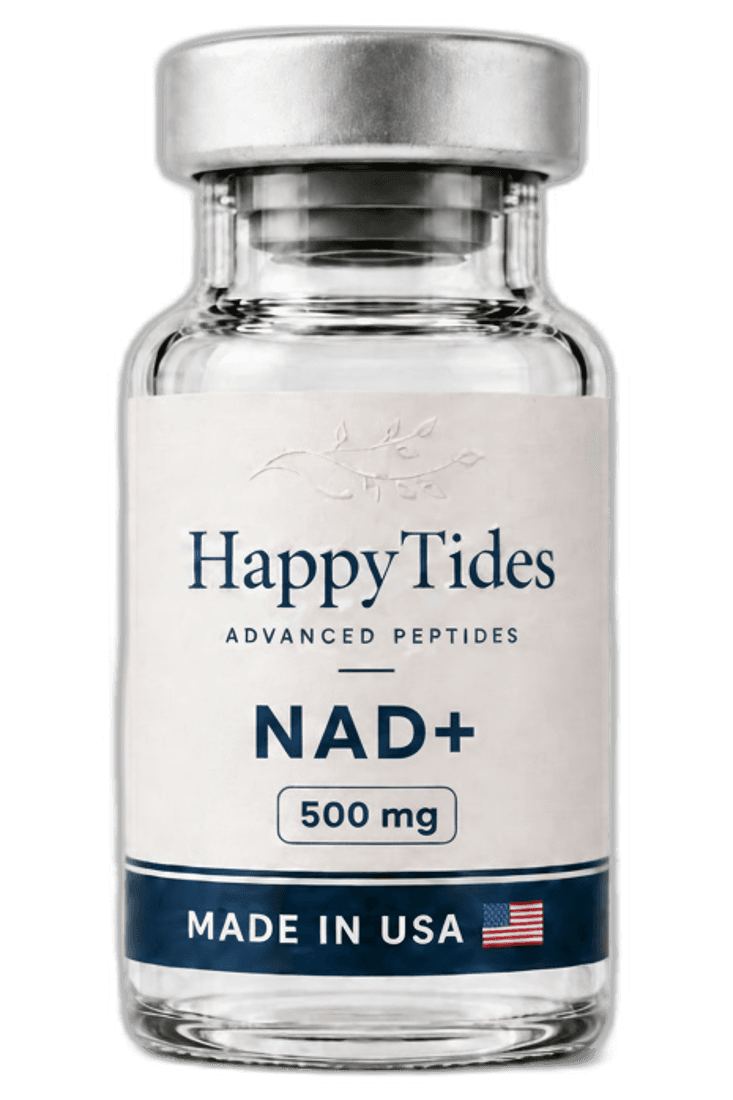
Part of the full NAD+ guide - a pyridine dinucleotide redox coenzyme reference compound, identity-verified with a COA on every vial.
In brief
The research framing for NAD+ in this entry is mechanistic and in-vitro, organized around three defined laboratory domains and anchored to two cited sources. No therapeutic or human-outcome claim is attached to any of the cited work as represented here; each citation is treated strictly as characterization of NAD+ biology at the cellular and biochemical level.
The detail
A closer look
01
Defined research areas
The entry names three research areas in which NAD+ is studied as a co-substrate or redox variable. First, mitochondrial-respiration and oxidative-phosphorylation models, where the NAD+/NADH couple's role in shuttling reducing equivalents is the object of study. Second, sirtuin (SIRT1–7) deacylase activity and cellular-aging studies, where NAD+ availability gates deacylase turnover. Third, PARP-mediated DNA-damage-response and genotoxic-stress assays, where NAD+ is consumed in DNA-repair signaling. These three areas map directly onto the three enzyme/pathway families described in the mechanism: redox cycling, sirtuins, and PARPs.
02
Cited literature (attributed only to provided sources)
Two citations are provided. Gomes, A. P., et al. (Sinclair lab), 2013, in Cell (DOI 10.1016/j.cell.2013.11.037; PMID 24360282), titled "Declining NAD+ induces a pseudohypoxic state disrupting nuclear-mitochondrial communication during aging" - a source examining how reduced NAD+ availability perturbs nuclear–mitochondrial communication, consistent with the entry's framing of NAD+ availability as a studied variable. Yoshino, J., Baur, J. A., and Imai, S., 2018, in Cell Metabolism (DOI 10.1016/j.cmet.2017.11.002; PMID 29249689), titled "NAD+ intermediates: the biology and therapeutic potential of NMN and NR" - a source addressing the biology of NAD+ intermediates. These are the only two references in the entry; no additional studies, numbers, or PMIDs are introduced here.
03
NAD+ availability as the unifying experimental variable
What ties the cited literature and the named research areas together is a single experimental construct emphasized in the entry: because sirtuins, PARPs, and CD38/cADPR consume NAD+ stoichiometrically, intracellular NAD+ availability is itself a studied variable rather than a constant background. The Gomes/Sinclair source is positioned around declining NAD+ and nuclear-mitochondrial communication, and the Yoshino/Baur/Imai source around NAD+ intermediate biology - both consistent with treating the NAD+ pool size as the quantity of interest across mitochondrial, sirtuin, and PARP/genotoxic-stress assays.
The fine print: products are sold for laboratory research use only and are not for human or animal consumption. Bodily introduction into humans or animals is strictly prohibited by law. NAD+ is not a drug and is not intended to diagnose, treat, cure, or prevent any disease. These statements have not been evaluated by the FDA.