
NAD+ Half-Life & Stability
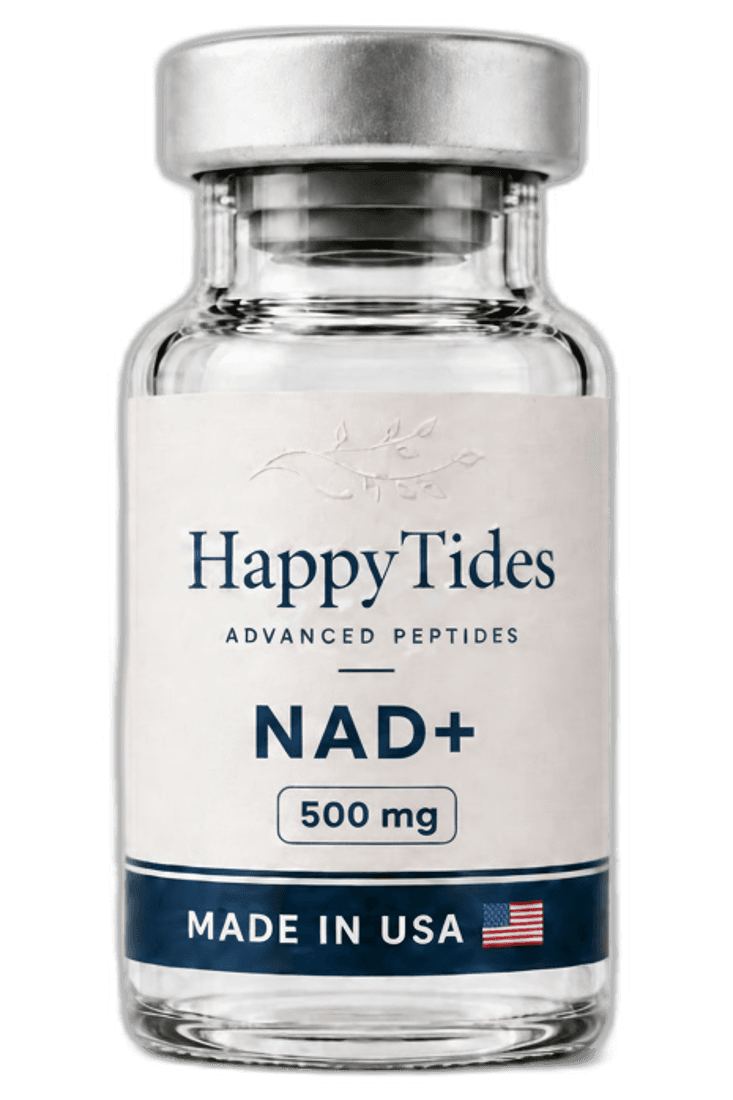
Part of the full NAD+ guide - a pyridine dinucleotide redox coenzyme reference compound, identity-verified with a COA on every vial.
In brief
The entry provides no NAD+-specific pharmacokinetic half-life, in-solution stability constant, or degradation-rate figure. The notes below therefore separate the one molecular property the data does supply - structural composition relevant to stability - from general handling principles for lyophilized cofactor reagents, which are stated as general laboratory practice rather than NAD+-specific measured values.
The detail
A closer look
01
What the entry's data supports directly
The entry does not report any half-life, in-vitro stability window, or degradation kinetics for NAD+. What it does supply is structural: NAD+ is a dinucleotide built from adenine and nicotinamide mononucleotides joined by a pyrophosphate bridge (formula C21H27N7O14P2, MW 663.43 g/mol). The pyrophosphate bridge is the structural linkage that defines the intact molecule; any statement beyond this regarding hydrolytic susceptibility or solution lifetime would exceed the provided data and is not asserted here. No PK parameter is claimed.
02
General cofactor-reagent storage principles (not NAD+-specific measurements)
As general laboratory practice for lyophilized small-molecule cofactors - applied here at the reagent-class level, not as NAD+-specific measured stability - dry lyophilate is the most stable handling form and is kept sealed, cool, and desiccated until reconstitution. Once in solution, such reagents are generally held refrigerated and protected from light, with aliquoting used to minimize repeated freeze–thaw cycles and repeated septum entry, both of which are generic degradation and contamination vectors for reconstituted stocks. These are conventions for preserving reagent integrity on the bench; the entry does not quantify a specific shelf life or decay rate for NAD+, and none is invented here.
The fine print: products are sold for laboratory research use only and are not for human or animal consumption. Bodily introduction into humans or animals is strictly prohibited by law. NAD+ is not a drug and is not intended to diagnose, treat, cure, or prevent any disease. These statements have not been evaluated by the FDA.