
NAD+ Reconstitution Guide
Part of the full NAD+ guide - a pyridine dinucleotide redox coenzyme reference compound, identity-verified with a COA on every vial.
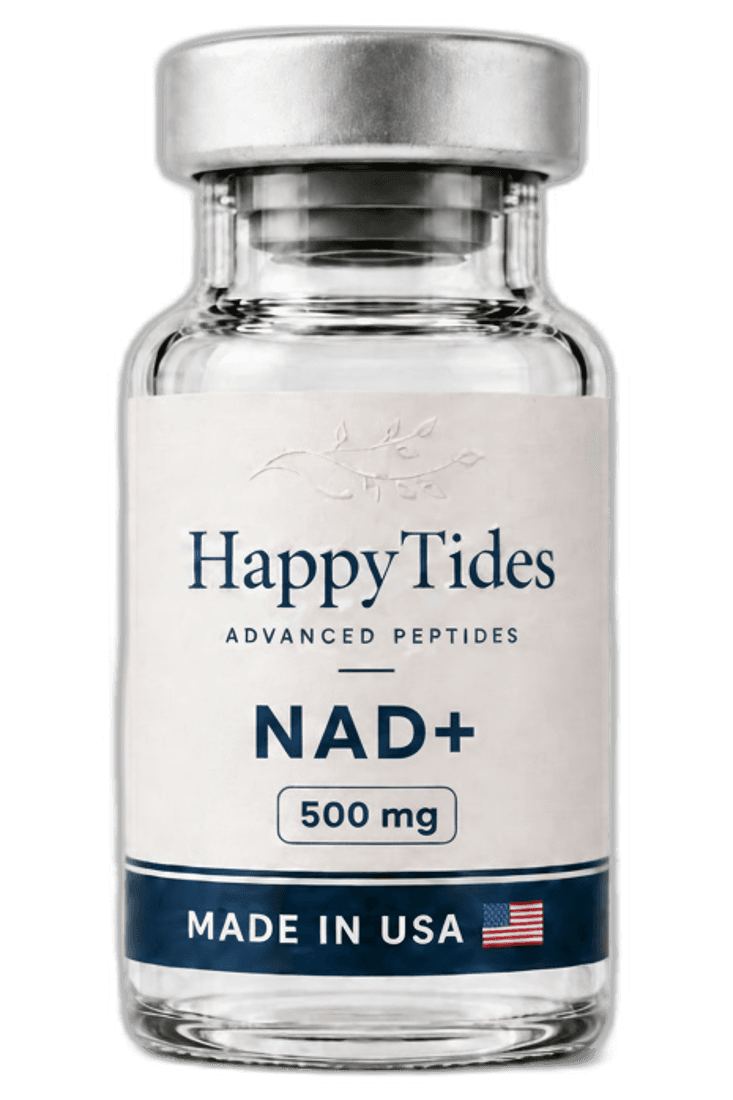
In brief
This describes laboratory reconstitution of a lyophilized NAD+ reference reagent for in-vitro use only - preparing a defined-concentration stock solution for bench handling. It is a benchtop preparation principle, not a human dosing protocol. NAD+ is a dinucleotide coenzyme (663.43 g/mol; C21H27N7O14P2; CAS 53-84-9), and its reconstitution follows the same concentration-math discipline used for any lyophilized small-molecule cofactor.
The detail
A closer look
01
Reconstitution principle and concentration math
Reconstitution dissolves a known dry mass of lyophilate into a known solvent volume to yield a defined stock concentration, where concentration = mass of solute / volume of diluent. For molar conversions the molecular weight (663.43 g/mol) is the conversion factor: moles = mass (g) / 663.43, so a target molar concentration is reached by selecting the diluent volume for a given vial mass. Bacteriostatic water is the conventional diluent for laboratory peptide/cofactor reconstitution because its preservative limits microbial growth across repeated vial entries; the solvent is added slowly down the vial wall rather than directly onto the powder to minimize mechanical and foaming stress. Gentle swirling, not vigorous shaking, brings the lyophilate into solution.
Step by step
How NAD+ is reconstituted
A bench reference for handling and preparation in an in-vitro research setting. Not a personal dosing protocol.
- 1
Equilibrate the sealed lyophilized NAD+ vial and the diluent to room temperature before opening, to limit condensation onto the powder.
- 2
Determine the target stock concentration and back-calculate the diluent volume from the labeled vial mass using MW 663.43 g/mol (concentration = mass / volume; moles = mass / 663.43).
- 3
Sanitize the vial septum and the diluent (bacteriostatic water) stopper with an alcohol wipe and allow to dry.
- 4
Draw the calculated volume of bacteriostatic water and introduce it slowly down the inner wall of the NAD+ vial, never jetting solvent directly onto the powder.
- 5
Allow the lyophilate to dissolve undisturbed, then swirl gently - do not shake or vortex aggressively - until the solution is clear and particulate-free.
- 6
Inspect for complete dissolution and clarity; label the vial with reagent identity, concentration, and reconstitution date for chain-of-custody.
- 7
Store the reconstituted stock under refrigeration and protected from light; aliquot to limit freeze–thaw and repeated septum entry.
The fine print: products are sold for laboratory research use only and are not for human or animal consumption. Bodily introduction into humans or animals is strictly prohibited by law. NAD+ is not a drug and is not intended to diagnose, treat, cure, or prevent any disease. These statements have not been evaluated by the FDA.