
BPC-157 Specs: Sequence, MW & CAS
Part of the full BPC-157 guide - a synthetic pentadecapeptide reference compound, identity-verified with a COA on every vial.
In brief
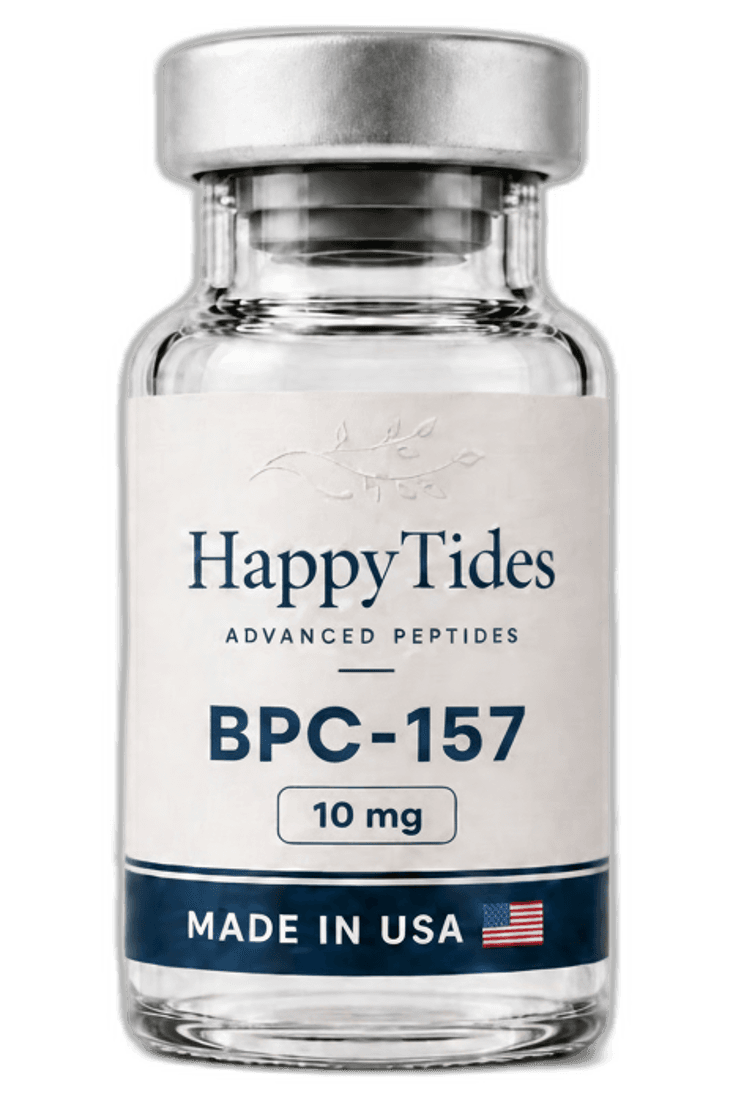
The molecular specification of BPC-157 anchors every downstream interpretation, so it is worth reading the spec card as more than a list of identifiers. The peptide is a synthetic pentadecapeptide with the sequence Gly-Glu-Pro-Pro-Pro-Gly-Lys-Pro-Ala-Asp-Asp-Ala-Gly-Leu-Val (one-letter GEPPPGKPADDAGLV), a molecular weight of 1419.5 g/mol (average ~1419.55), the molecular formula C62H98N16O22, and CAS number 137525-51-0, with PubChem CID 9941957. It is described as a partial sequence derived from the human gastric juice protein BPC, placing it in the cytoprotective/pro-angiogenic research-peptide class. The sections below unpack what each of these identifiers means for structure-function reasoning and laboratory traceability, staying within the data provided. No additional structural features, salt forms, or modifications are asserted beyond what the entry states, and no therapeutic interpretation of the structure is offered.
To the molecule
Molecular specifications
Gly-Glu-Pro-Pro-Pro-Gly-Lys-Pro-Ala-Asp-Asp-Ala-Gly-Leu-Val (one-letter: GEPPPGKPADDAGLV)The detail
A closer look
01
Sequence and composition: reading GEPPPGKPADDAGLV
The 15-residue sequence is structurally distinctive. It opens with glycine and glutamate, carries a triple-proline run (Pro-Pro-Pro) plus an additional proline, a single lysine, two consecutive aspartates (Asp-Asp), and closes with leucine-valine. The proline content is the most notable feature for structure-function discussion, since prolines impose backbone constraints that shape peptide conformation. The aspartate pair and the lysine contribute charged side chains. The entry frames this as a partial sequence of the larger BPC protein found in human gastric juice, meaning BPC-157 is a defined fragment rather than a full protein. The amino-acid count of 15 (pentadecapeptide) is consistent across the entry's key facts and the Sikiric reviews, so the sequence and length should be treated as the firm structural backbone of any in-vitro work.
02
Molecular weight, formula, and what they constrain
The molecular weight of 1419.5 g/mol and formula C62H98N16O22 are the values used for all stoichiometric and concentration calculations at the bench. The 16 nitrogen atoms are consistent with a 15-residue peptide plus side-chain nitrogen contributions from lysine; the 22 oxygens reflect the backbone carbonyls plus the aspartate and glutamate carboxyl groups. For laboratory use, the molecular weight is the single most operationally important number: it converts any mass-per-volume reconstitution into a molar concentration, which is essential given that reported activity spans nanomolar-to-micromolar ranges. Treating 1419.5 g/mol as the conversion constant keeps stock and working concentrations traceable and comparable across the endothelial and fibroblast assay contexts described elsewhere in the entry.
03
Identifiers and traceability: CAS, PubChem, and regulatory status
CAS number 137525-51-0 and PubChem CID 9941957 are the canonical database identifiers that let a researcher cross-reference the exact compound across registries and avoid ambiguity with related sequences or salt forms. These identifiers are the entry's link to external compound records. On status, the entry is explicit: BPC-157 is not an FDA-approved drug and is characterized as a research-use peptide, consistent with FDA compounding and peptide guidance noted in the key facts. For specification purposes this matters because it frames the material as a research reagent identified by sequence, formula, and registry number rather than as a formulated pharmaceutical product. All laboratory documentation should carry these identifiers for unambiguous traceability.
The fine print: products are sold for laboratory research use only and are not for human or animal consumption. Bodily introduction into humans or animals is strictly prohibited by law. BPC-157 is not a drug and is not intended to diagnose, treat, cure, or prevent any disease. These statements have not been evaluated by the FDA.