
BPC-157 Research & Studies
Part of the full BPC-157 guide - a synthetic pentadecapeptide reference compound, identity-verified with a COA on every vial.
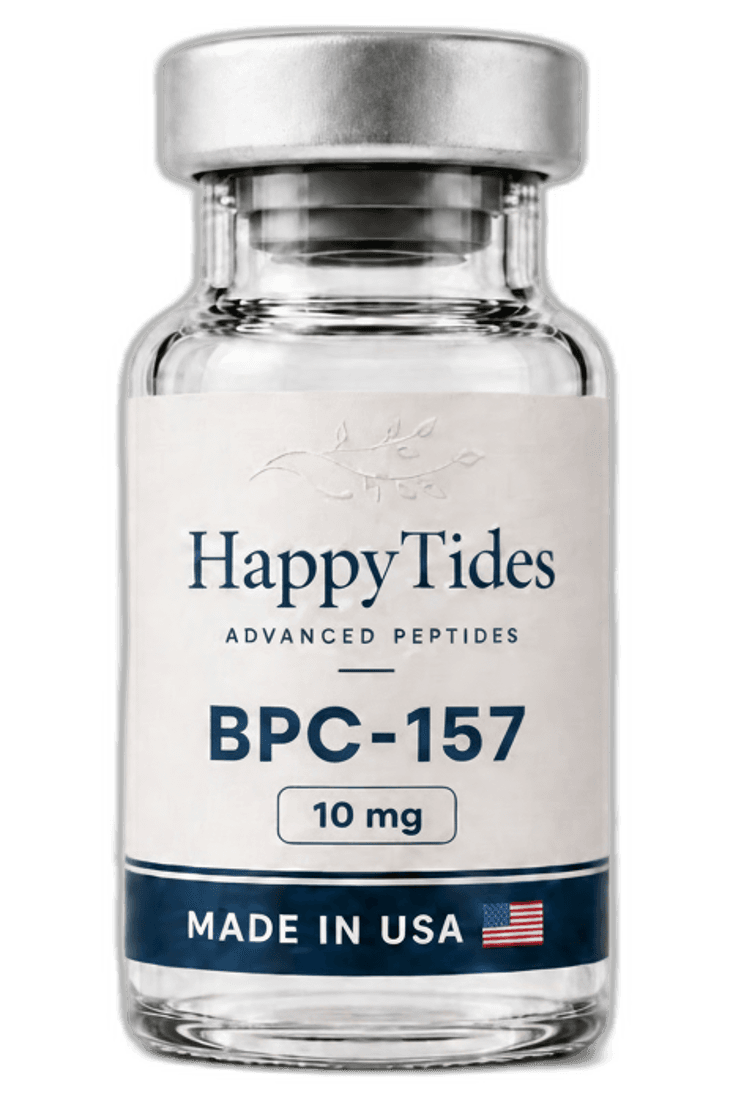
In brief
BPC-157's research footprint, as represented in the provided citation set, is narrow, mechanistic, and almost entirely in-vitro or ex-vivo. Four sources anchor the entry: two endothelial signaling papers from Hsieh and colleagues (2017 and 2020), one tendon-fibroblast study from Chang and colleagues (2011), and a Sikiric-led review (2014) that situates the peptide within nitric-oxide-system biology. These are not clinical or outcome studies; they are cell-based and isolated-tissue investigations that interrogate specific phosphorylation events, transcript and protein levels, and cytoskeletal behavior. Reading them together clarifies what the entry's listed research areas actually examine and, just as importantly, what they do not. The following sections attribute each research area strictly to its source, describe the model systems involved, and keep interpretation inside the receptor-signaling and laboratory frame. No outcome, indication, or organismal claim is drawn beyond what these in-vitro and ex-vivo observations support.
The detail
A closer look
01
Endothelial angiogenesis signaling (Hsieh 2017, 2020)
The two angiogenesis-related research areas map directly onto the Hsieh papers. The 2017 J Mol Med study (PMID 27847966) investigates VEGFR2 expression, internalization, and VEGFR2-Akt-eNOS pathway activation in vascular endothelial cells, with dynasore used to test endocytic dependence. Its central observation is that receptor up-regulation occurs without a rise in VEGF-A. The 2020 Scientific Reports study (PMID 33051481) examines eNOS regulation through the Src-Caveolin-1 axis and reports ex-vivo modulation of vasomotor tone. Together these define the entry's first two research areas as a coherent endothelial program with two arms: a VEGFR2-dependent, endocytosis-sensitive transcriptional and signaling response, and a VEGF-independent nitric-oxide release mechanism. Both are cell-based or isolated-tissue contexts.
02
Tendon fibroblast cytoskeletal models (Chang 2011)
The tendon-fibroblast research area is supported by Chang et al. 2011 (J Appl Physiol, PMID 21030672), titled around the promoting effect of the pentadecapeptide on tendon healing via tendon outgrowth, cell survival, and cell migration. In the entry's mechanistic framing, this corresponds to FAK and paxillin phosphorylation, F-actin assembly, and cell-migration models. The study's model system is tendon fibroblast culture with outgrowth and migration readouts, which is why the entry also lists cellular cytoprotection and oxidative-stress survival assays using hydrogen peroxide (H2O2) in fibroblast culture. These survival assays sit alongside the migration work as cell-level endpoints. Importantly, this is preclinical cell-culture research, and the listed endpoints are biochemical and morphological rather than clinical.
03
Nitric-oxide-system framing (Sikiric 2014 review)
The Sikiric et al. 2014 review in Current Pharmaceutical Design (PMID 23755725), titled around the stable gastric pentadecapeptide BPC 157-NO-system relation, supplies the entry's mechanistic-framework research area. Rather than reporting new bench data, a review of this kind organizes prior observations around the nitric-oxide system as a unifying interpretive lens. This is consistent with both Hsieh papers' eNOS focus. For researchers, the review's role is contextual: it frames how the disparate endothelial and fibroblast findings might relate through nitric-oxide signaling, while the primary experimental claims still trace back to the individual cell-based and ex-vivo studies. No additional citations beyond these four should be inferred from the entry.
The fine print: products are sold for laboratory research use only and are not for human or animal consumption. Bodily introduction into humans or animals is strictly prohibited by law. BPC-157 is not a drug and is not intended to diagnose, treat, cure, or prevent any disease. These statements have not been evaluated by the FDA.