
BPC-157 Half-Life & Stability
Part of the full BPC-157 guide - a synthetic pentadecapeptide reference compound, identity-verified with a COA on every vial.
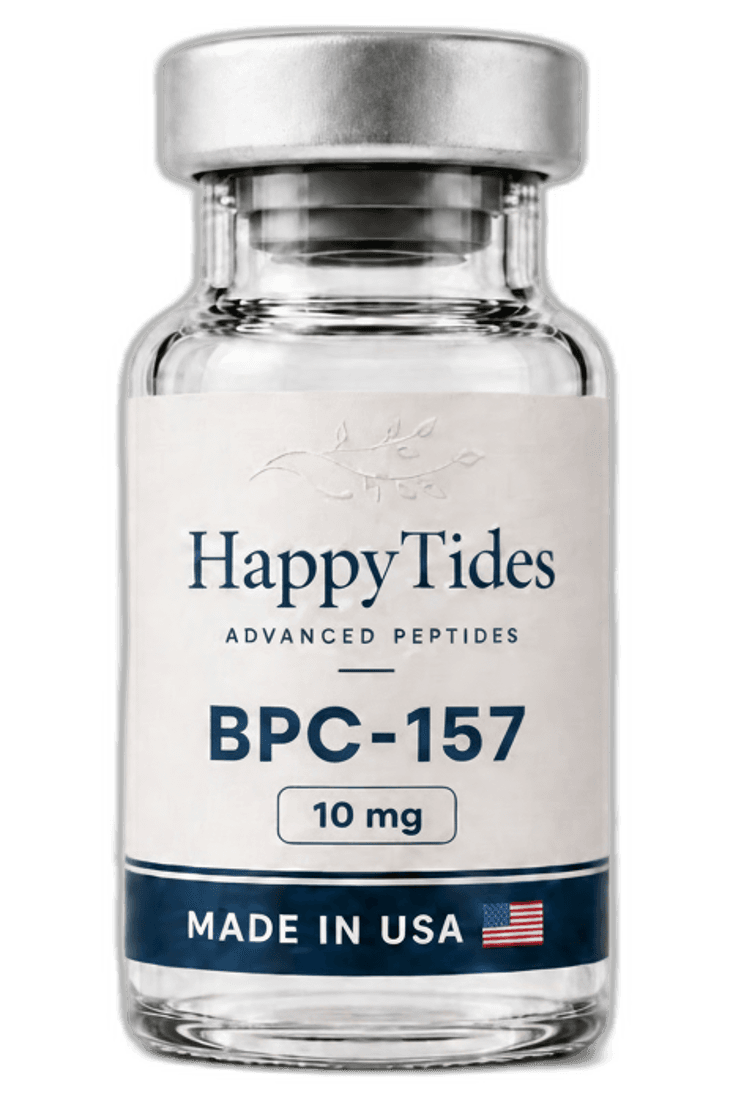
In brief
BPC-157's pharmacokinetic and stability behavior, as it pertains to laboratory handling, must be discussed carefully because the provided entry contains no peptide-specific half-life value, clearance rate, or degradation constant. What the data do supply is structural and class information: a synthetic 15-residue pentadecapeptide (GEPPPGKPADDAGLV) of molecular weight 1419.5 g/mol and formula C62H98N16O22, characterized by repeated proline residues and aspartate-rich stretches. From these, only general peptide-class stability principles can be discussed, and they are clearly labeled as general. The sections below separate what is known from the entry (composition and the in-vitro concentration range over which activity is reported) from what is a general expectation for oligopeptides in solution. No specific in-vivo half-life, no specific serum stability number, and no degradation kinetics are claimed, because the source set does not provide them. This keeps the discussion honest and bench-relevant rather than speculative.
The detail
A closer look
01
What the structure suggests, in general terms
BPC-157 is described as a stable gastric pentadecapeptide in the Sikiric et al. 2014 review title, and its sequence is notably proline-rich (it contains multiple proline residues, including a Pro-Pro-Pro run). As a general peptide-chemistry principle, proline residues can influence conformational rigidity and resistance to certain peptidases, which is one reason proline-containing peptides are often discussed in terms of comparative stability. The entry does not, however, provide measured stability or half-life data, so this remains a general structural observation rather than a quantified property. For laboratory purposes, the practical takeaway is that the peptide is handled like other small synthetic oligopeptides, with stability governed by solution conditions, temperature, and freeze-thaw exposure rather than by any value the source set quantifies.
02
Bench-relevant stability and storage implications
Because no peptide-specific degradation kinetics are provided, storage and assay timing decisions default to general peptide-class practice. Lyophilized material is generally more stable than reconstituted solution; once in aqueous diluent, peptides are subject to hydrolysis and oxidation over time, so reconstituted stock is typically used promptly or aliquoted and frozen to limit freeze-thaw cycling. Within an assay, the reported nanomolar-to-micromolar active range means working dilutions are prepared fresh from a documented stock to preserve known concentration. None of this implies a numeric in-vitro half-life; it simply reflects standard handling for an oligopeptide of this size. Researchers needing actual stability constants would have to generate them empirically, as the provided data set does not include them.
The fine print: products are sold for laboratory research use only and are not for human or animal consumption. Bodily introduction into humans or animals is strictly prohibited by law. BPC-157 is not a drug and is not intended to diagnose, treat, cure, or prevent any disease. These statements have not been evaluated by the FDA.