
BPC-157 Reconstitution Guide
Part of the full BPC-157 guide - a synthetic pentadecapeptide reference compound, identity-verified with a COA on every vial.
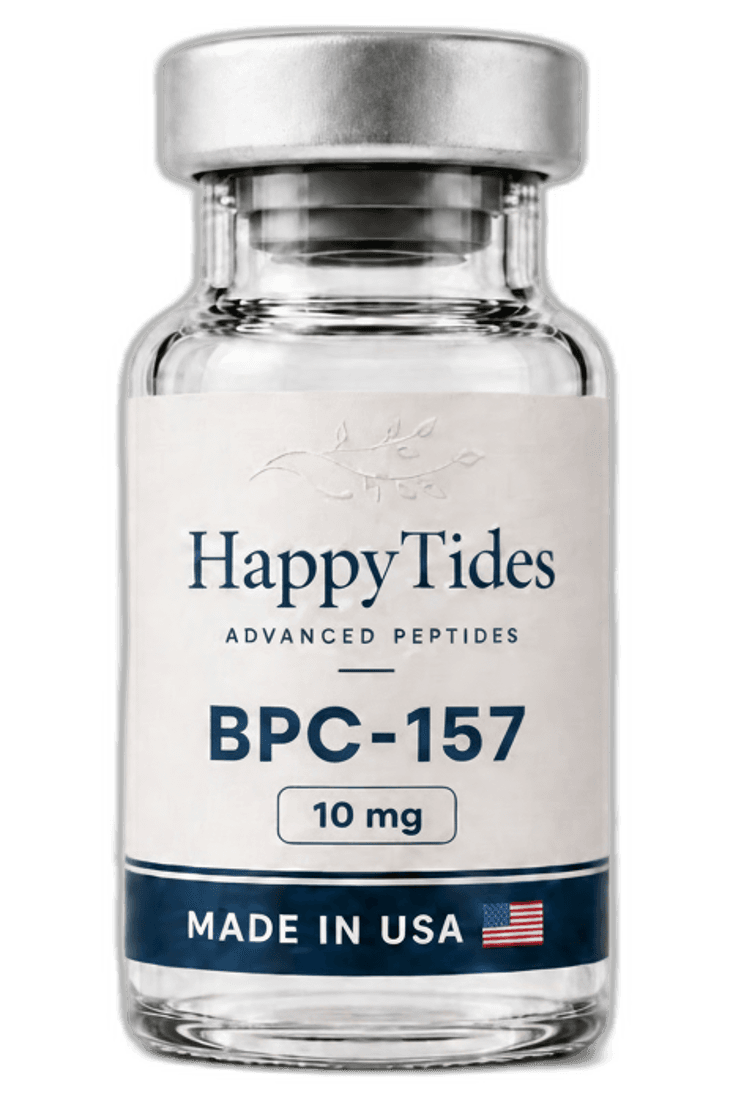
In brief
Reconstitution of lyophilized BPC-157 for in-vitro research is a laboratory-handling procedure, not a dosing protocol. The goal is to convert the supplied freeze-dried pentadecapeptide (molecular weight 1419.5 g/mol, formula C62H98N16O22) into a defined-concentration stock suitable for bench assays such as the endothelial and fibroblast signaling work that characterizes this peptide. Because reported in-vitro activity spans nanomolar-to-micromolar concentrations, accurate concentration math is the central concern: a known peptide mass dissolved in a known diluent volume yields a known molar stock from which working dilutions are prepared in culture medium or assay buffer. Bacteriostatic water is the conventional reconstitution diluent for handling research peptides, providing benzyl-alcohol-buffered aqueous solubilization. The sections and ordered steps below describe diluent selection, concentration calculation, and storage and stability handling strictly for laboratory preparation. Nothing here describes human or animal administration; all references to concentration are for in-vitro stock preparation and subsequent assay dilution.
The detail
A closer look
01
Diluent choice and concentration math
Bacteriostatic water (water with benzyl alcohol as a bacteriostatic agent) is the standard diluent for reconstituting research peptides because it resists microbial growth across repeated stock access. The reconstitution principle is straightforward: dissolve a known mass of peptide in a chosen volume to set the stock concentration. For example, reconstituting a vial containing a defined milligram quantity in a defined milliliter volume yields a mass-per-volume stock; dividing that mass concentration by the molecular weight (1419.5 g/mol) converts it to a molar concentration. Because documented activity runs from nanomolar to micromolar, prepare a comfortably concentrated stock and reach working concentrations by serial dilution into culture medium or assay buffer, minimizing pipetting error at the low end of the range. Always record the exact mass and volume used so the molar concentration is traceable.
02
Storage and stability handling
As a multi-residue peptide, BPC-157 stock should be handled to limit hydrolytic and oxidative degradation during the life of an assay program. Standard laboratory practice for reconstituted research peptides is to add diluent gently down the vial wall rather than directly onto the lyophilate, swirl rather than vortex to avoid shear and foaming, and allow full dissolution before use. Reconstituted stock is typically kept refrigerated for short-term use and aliquoted and frozen for longer-term storage to avoid repeated freeze-thaw cycles, which are a general degradation risk for peptides. Lyophilized material is generally more stable than solution and is kept cold and desiccated until reconstitution. These are general peptide-class handling principles; the entry does not provide BPC-157-specific stability constants, so exact shelf-life figures should not be assumed.
Step by step
How BPC-157 is reconstituted
A bench reference for handling and preparation in an in-vitro research setting. Not a personal dosing protocol.
- 1
Equilibrate the sealed lyophilized BPC-157 vial and the bacteriostatic water diluent to room temperature before opening, to limit condensation on the cold peptide.
- 2
Calculate the target stock concentration from the labeled peptide mass and the diluent volume you will add; use the molecular weight 1419.5 g/mol to convert the resulting mass-per-volume concentration to molarity.
- 3
Sanitize the vial septa and draw the predetermined volume of bacteriostatic water with a clean syringe or pipette.
- 4
Add the diluent slowly down the inner wall of the vial onto the lyophilized cake rather than directly onto it, to reduce shear.
- 5
Allow the peptide to dissolve undisturbed, then swirl gently (do not vortex or shake vigorously) until the solution is clear, indicating full reconstitution.
- 6
Verify and record the exact mass and final volume so the molar concentration of the stock is documented and traceable.
- 7
Prepare assay working concentrations within the reported nanomolar-to-micromolar in-vitro range by serial dilution into culture medium or assay buffer.
- 8
Aliquot the stock into single-use volumes to avoid repeated freeze-thaw, label with concentration and date, and store cold per general peptide handling practice.
The fine print: products are sold for laboratory research use only and are not for human or animal consumption. Bodily introduction into humans or animals is strictly prohibited by law. BPC-157 is not a drug and is not intended to diagnose, treat, cure, or prevent any disease. These statements have not been evaluated by the FDA.