
BPC-157 - Frequently Asked Questions
Part of the full BPC-157 guide - a synthetic pentadecapeptide reference compound, identity-verified with a COA on every vial.
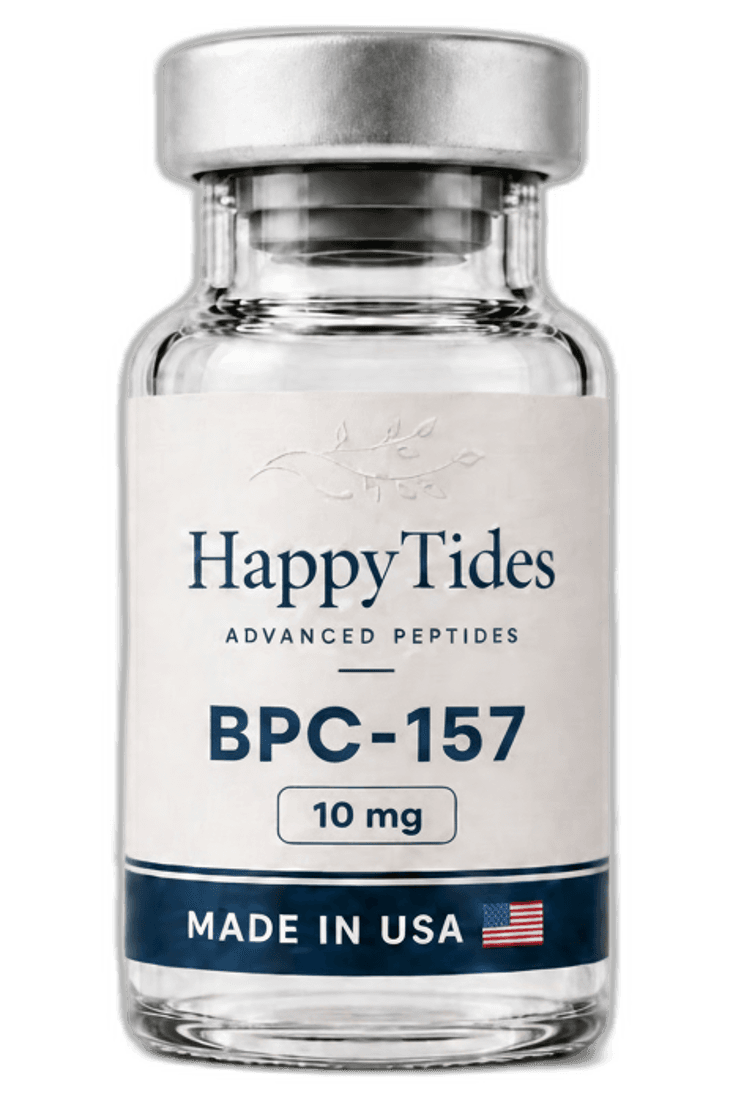
Straight answers
BPC-157, answered
What class of peptide is BPC-157?
It is a synthetic pentadecapeptide, meaning a 15-amino-acid oligopeptide. The entry describes it as a partial sequence derived from the human gastric juice protein BPC, classed as a cytoprotective/pro-angiogenic research peptide. It is studied in cell-based and isolated-tissue models, not as a ligand for a single cloned receptor.
What is the amino-acid sequence of BPC-157?
The sequence is Gly-Glu-Pro-Pro-Pro-Gly-Lys-Pro-Ala-Asp-Asp-Ala-Gly-Leu-Val, or GEPPPGKPADDAGLV in one-letter code. It is 15 residues long (a pentadecapeptide) and is notably proline-rich, including a triple-proline run.
What are the molecular weight and molecular formula?
The molecular weight is 1419.5 g/mol (average roughly 1419.55) and the molecular formula is C62H98N16O22. The molecular weight is the key conversion constant for turning a mass-per-volume reconstitution into a molar concentration at the bench.
What are the registry identifiers for BPC-157?
Its CAS number is 137525-51-0 and its PubChem CID is 9941957. These identifiers allow unambiguous cross-referencing of the exact compound across chemical databases and should be carried in laboratory documentation for traceability.
What is the main in-vitro mechanism reported?
In vascular endothelial cells, BPC-157 up-regulates VEGFR2 (KDR) mRNA and protein without raising VEGF-A and promotes VEGFR2 internalization, driving a time-dependent VEGFR2-Akt-eNOS cascade. This activation is abolished by the endocytosis inhibitor dynasore, indicating dependence on receptor internalization.
Is there a VEGF-independent pathway?
Yes. The entry describes a VEGF-independent route in which Src kinase-mediated phosphorylation within the Caveolin-1/eNOS complex releases eNOS, increasing nitric oxide output and modulating vasomotor tone in a nitric-oxide-dependent manner ex vivo (Hsieh et al. 2020, PMID 33051481).
What does BPC-157 do in tendon fibroblast models?
In tendon fibroblast culture, it increases FAK and paxillin phosphorylation, promotes F-actin assembly, and enhances cell spreading and migration in outgrowth and migration assays (Chang et al. 2011, PMID 21030672). Hydrogen peroxide (H2O2) survival assays are also used as cellular cytoprotection readouts.
Over what concentration range is in-vitro activity reported?
Reported activity spans nanomolar-to-micromolar concentrations in vitro. Working dilutions for assays should bracket this range, prepared by serial dilution from a documented stock into culture medium or assay buffer.
How is BPC-157 reconstituted for laboratory research?
For in-vitro use, lyophilized peptide is dissolved in bacteriostatic water, with the stock concentration set by the mass dissolved in the chosen diluent volume and converted to molarity using the 1419.5 g/mol molecular weight. This is laboratory stock preparation, not a dosing protocol. Aliquot and store cold to limit freeze-thaw degradation.
Does the data provide a half-life for BPC-157?
No specific half-life, clearance rate, or degradation constant is provided in the entry. Only general peptide-class stability principles apply: lyophilized material is generally more stable than solution, and reconstituted stock is typically aliquoted and frozen to limit freeze-thaw cycles. Any specific stability values would have to be determined empirically.
Which sources underpin the BPC-157 mechanism claims?
Four sources: Hsieh et al. 2017 (J Mol Med, PMID 27847966) on VEGFR2-Akt-eNOS activation; Hsieh et al. 2020 (Scientific Reports, PMID 33051481) on the Src-Caveolin-1-eNOS pathway; Chang et al. 2011 (J Appl Physiol, PMID 21030672) on tendon fibroblast signaling; and the Sikiric et al. 2014 review (Current Pharmaceutical Design, PMID 23755725) framing the nitric-oxide-system relation.
What is the regulatory status of BPC-157?
The entry states it is not an FDA-approved drug and is a research-use peptide, consistent with FDA compounding and peptide guidance noted in its key facts. It is treated as a research reagent identified by sequence, formula, and registry number rather than a formulated pharmaceutical product.
The fine print: products are sold for laboratory research use only and are not for human or animal consumption. Bodily introduction into humans or animals is strictly prohibited by law. BPC-157 is not a drug and is not intended to diagnose, treat, cure, or prevent any disease. These statements have not been evaluated by the FDA.