
TB-500 Research & Studies
Part of the full TB-500 guide - a synthetic β-thymosin-derived heptapeptide reference compound, identity-verified with a COA on every vial.
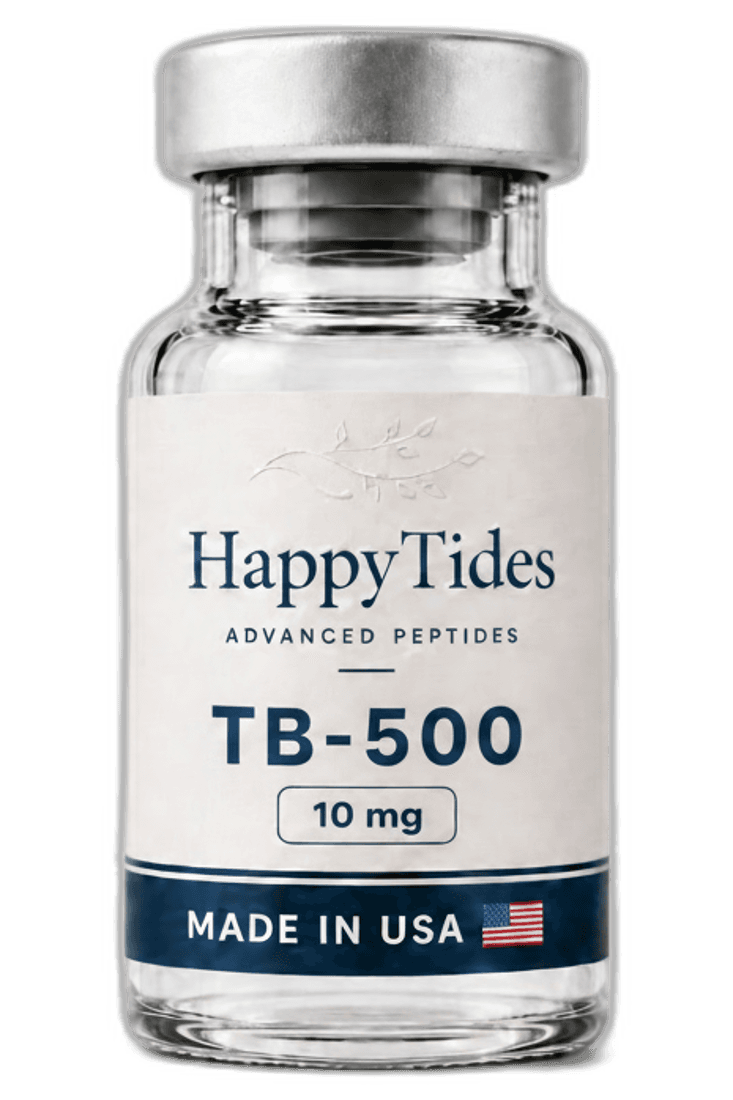
In brief
The research record cited for TB-500 centers on its parent molecule, thymosin beta-4, and on the LKKTET actin-binding motif that the heptapeptide isolates. Five primary sources span roughly two decades of cell-free and cultured-cell investigation: actin-polymerization regulation in living cells, mutational mapping of the binding site, the angiogenic role of the motif in endothelial models, a comprehensive review of basic properties, and a structural account of how WH2-domain peptides switch between inhibiting and promoting actin assembly. The six designated research areas track these themes, from monomer-sequestration assays to comparative beta-thymosin biochemistry. This section describes what each cited source actually investigated and the in-vitro or preclinical model contexts involved, attributing claims only to the provided references. No clinical endpoints, human protocols, or outcomes beyond these laboratory and biochemical contexts are introduced, consistent with the research-use-only framing of the entry.
The detail
A closer look
01
Actin polymerization in living cells: Sanders et al. 1992
Sanders, Goldstein and Wang (PNAS 1992, PMID 1584803) established thymosin beta-4, then also called Fx peptide, as a potent regulator of actin polymerization in living cells. This work anchors the central research area of G-actin sequestration and actin-monomer buffering: it positioned the peptide as a key controller of the unpolymerized actin pool inside cells rather than a passive structural component. The study's living-cell context is foundational to why later fragment work, including TB-500, is interpreted through the lens of monomer sequestration. It supplies the mechanistic premise that buffering free actin monomers governs the availability of subunits for filament assembly, which the subsequent cell-free polymerization-kinetics and cytoskeletal-dynamics research areas build upon directly.
02
Mapping the binding site and the angiogenic motif
Two cited studies dissect structure-activity relationships. Van Troys and colleagues (EMBO J 1996, PMID 8617195) mapped the actin-binding site by mutational analysis, localizing contacts to the LKKTET lysines and an N-terminal helix region; this underpins the structure-activity research area for the LKKTET/WH2 motif using mutational methods. Philp and colleagues (FASEB J 2003, PMID 14500546) then showed that the seven-amino-acid actin-binding motif is required for angiogenic activity in endothelial cell models, connecting the same motif to the angiogenesis and endothelial tubule-formation in-vitro research area. Together these sources justify studying TB-500, the isolated motif-bearing fragment, as the minimal determinant of both actin binding and the cytoskeletal, migration-relevant behavior observed in cultured endothelial systems.
03
Structural switching and comparative beta-thymosin biochemistry
Hertzog and colleagues (Cell 2004, PMID 15369675) examined the beta-thymosin/WH2 domain and described the structural basis for the switch from inhibition to promotion of actin assembly, informing both the structure-activity research area and comparative beta-thymosin family biochemistry. This work explains how a single motif class can produce opposite cytoskeletal outcomes depending on conformational context. Goldstein and colleagues (Expert Opin Biol Ther 2012, PMID 22074294) provide a review of the basic properties of thymosin beta-4, consolidating the G-actin sequestration mechanism and the inhibition of nucleotide exchange. As a review, it serves as the integrative reference tying the sequestration, polymerization-kinetics, and cytoskeletal-dynamics research areas into a single account of the parent peptide's biochemistry that frames TB-500 work.
The fine print: products are sold for laboratory research use only and are not for human or animal consumption. Bodily introduction into humans or animals is strictly prohibited by law. TB-500 is not a drug and is not intended to diagnose, treat, cure, or prevent any disease. These statements have not been evaluated by the FDA.