
TB-500 Reconstitution Guide
Part of the full TB-500 guide - a synthetic β-thymosin-derived heptapeptide reference compound, identity-verified with a COA on every vial.
In brief
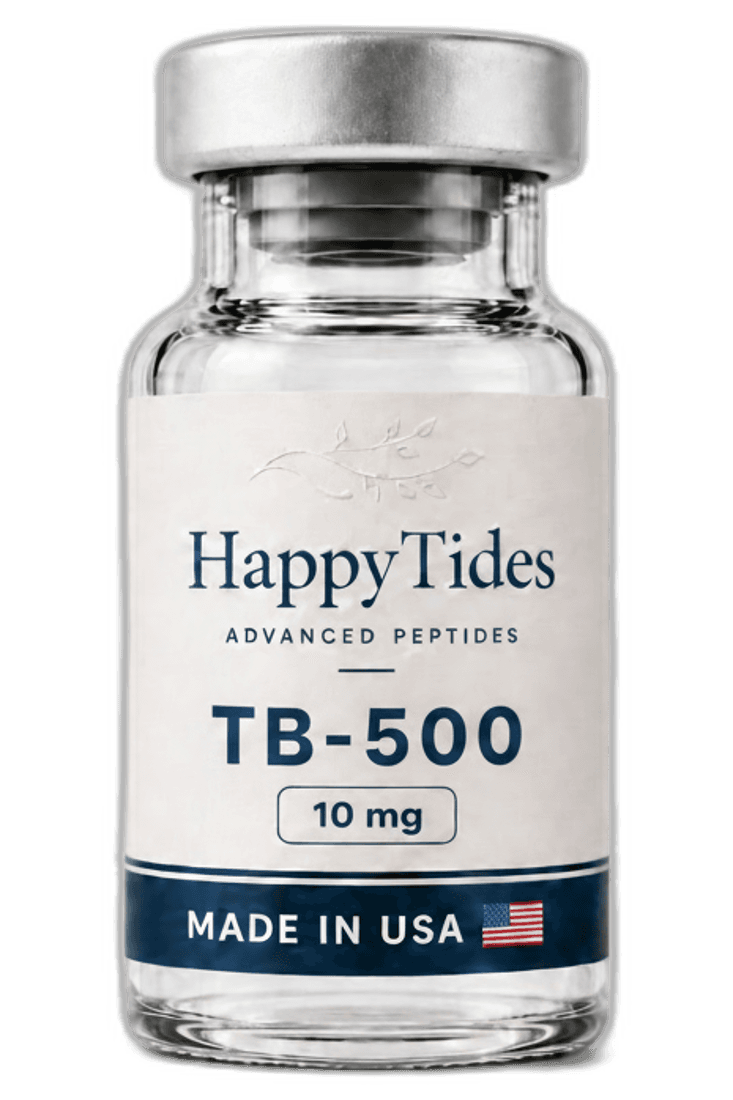
This section describes laboratory reconstitution of TB-500 for in-vitro research handling only. As a lyophilized synthetic heptapeptide (Ac-LKKTETQ, molecular weight ~889.0 g/mol for the free base, ~949.1 g/mol for the acetate salt), TB-500 is typically supplied as a dried powder that must be brought into solution before use in cell-free or cultured-cell assays. Bacteriostatic water is the conventional reconstitution diluent because the benzyl alcohol it contains limits microbial growth across repeated aliquoting from a multi-use vial. The governing principle is straightforward: the dry mass in the vial is fixed, so the final concentration is determined entirely by the volume of diluent added. Choosing that volume against a target working concentration lets a researcher prepare reproducible stock solutions. Everything below is benchtop laboratory preparation for in-vitro experiments and is not a human dosing protocol; concentrations are expressed in laboratory units appropriate to actin-binding and cytoskeletal assays.
The detail
A closer look
01
Concentration math and the salt-form correction
Because the peptide mass is fixed, concentration equals mass divided by diluent volume. For a vial containing a known milligram quantity, adding a defined volume of bacteriostatic water yields a stock whose concentration is that mass over that volume. The molecular weight matters when converting between mass and molar concentration for binding assays: the free base is ~889.0 g/mol while the acetate salt is ~949.1 g/mol, so the acetate counterion adds mass that does not contribute peptide. Researchers preparing molar stocks for G-actin sequestration work should confirm which form the certificate of analysis specifies and apply the corresponding molecular weight, otherwise the calculated molarity will be slightly overstated. Recording the exact diluent volume and lot ensures reproducible stock concentrations across experimental replicates.
02
Stability and storage handling
Reconstituted peptide solutions are generally less stable than the lyophilized powder, so handling should minimize freeze-thaw cycling and prolonged time at ambient temperature. As a short synthetic heptapeptide, TB-500's defined sequence and N-acetylated terminus are features to preserve through cold, single-use aliquoting. The lyophilized starting material is the most stable form; once in aqueous solution, dividing the stock into single-use aliquots avoids repeated warming and refreezing of the whole batch. Bacteriostatic water's preservative supports multi-use vial handling, but aliquoting remains the more robust practice for maintaining assay-grade material. Label every aliquot with concentration, diluent, and date so stability can be tracked across the experimental window.
Step by step
How TB-500 is reconstituted
A bench reference for handling and preparation in an in-vitro research setting. Not a personal dosing protocol.
- 1
Allow the sealed lyophilized TB-500 vial and the bacteriostatic water to equilibrate to room temperature before opening, reducing condensation on the dry powder.
- 2
Select a target stock concentration appropriate to your in-vitro assay and calculate the diluent volume from the vial's stated peptide mass (concentration = mass / volume).
- 3
Confirm whether the vial contains free base (~889.0 g/mol) or acetate salt (~949.1 g/mol) and use the matching molecular weight for any molar-concentration conversions.
- 4
Add the calculated volume of bacteriostatic water slowly down the inner vial wall rather than directly onto the powder, to limit foaming and shear.
- 5
Do not shake; swirl gently or let the vial stand until the peptide is fully dissolved into a clear solution.
- 6
Divide the reconstituted stock into single-use aliquots to minimize freeze-thaw cycles during the experimental series.
- 7
Store aliquots cold, label each with concentration, diluent, and preparation date, and use within the validated stability window for your assay.
The fine print: products are sold for laboratory research use only and are not for human or animal consumption. Bodily introduction into humans or animals is strictly prohibited by law. TB-500 is not a drug and is not intended to diagnose, treat, cure, or prevent any disease. These statements have not been evaluated by the FDA.