
TB-500 Half-Life & Stability
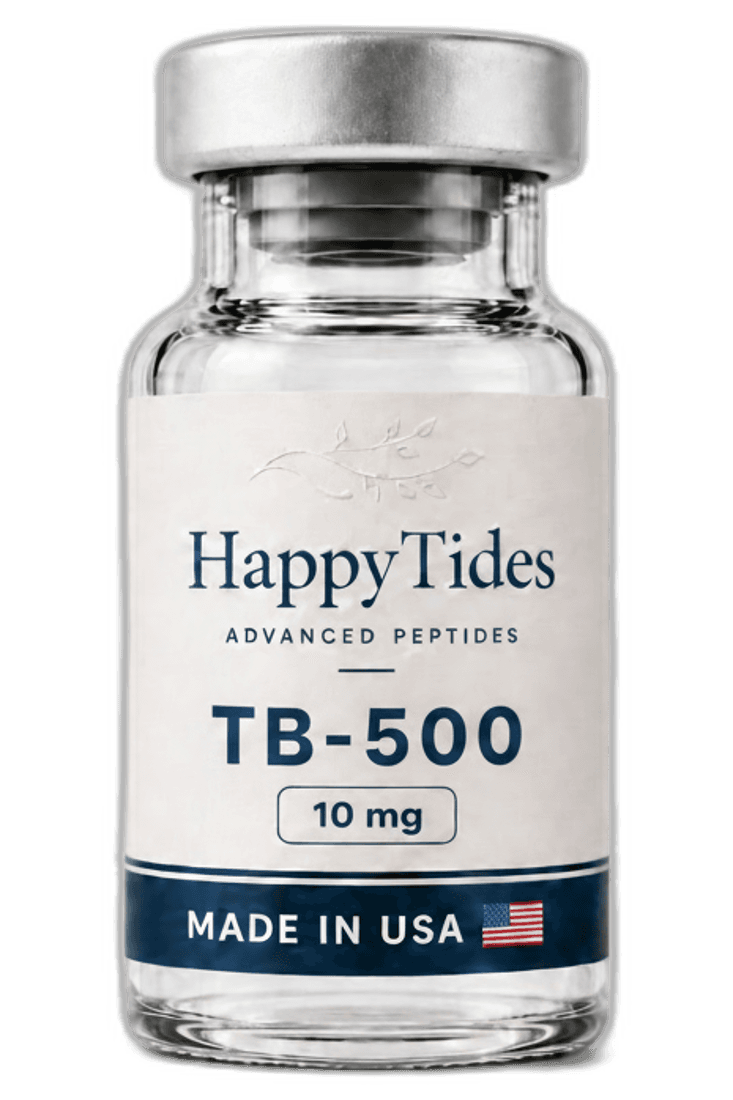
Part of the full TB-500 guide - a synthetic β-thymosin-derived heptapeptide reference compound, identity-verified with a COA on every vial.
In brief
TB-500's stability and persistence characteristics are best understood by combining the specific molecular facts in the entry with general principles for short synthetic peptides, while being explicit about where peptide-specific kinetic data is not provided. The entry supplies a defined molecular identity (Ac-LKKTETQ, ~889.0 g/mol free base, formula C38H68N10O14) and an N-acetylated N-terminus, but it does not provide a measured half-life, clearance rate, or degradation constant for the peptide. Accordingly, this section discusses stability and degradation in terms of the documented structural features and general peptide-class behavior, and it clearly flags where statements are general rather than TB-500-specific. The relevant frame is benchtop and storage stability for in-vitro research material, not in-vivo pharmacokinetics, since no in-vivo kinetic parameters appear in the provided data. The structural cues that are provided, particularly the N-acetyl cap and the short heptapeptide length, are the legitimate basis for any stability discussion here.
The detail
A closer look
01
What the N-acetylated terminus implies, generally
The entry specifies that TB-500 is N-acetylated, beginning with an Ac- group on the leucine of Ac-LKKTETQ. As a general principle of peptide chemistry, N-terminal acetylation caps the free alpha-amino group, a modification commonly associated with reduced susceptibility to aminopeptidase action at that terminus. This is a class-level structural observation drawn from the documented acetyl cap, not a measured stability value for TB-500. The entry does not report degradation rates, so no specific persistence figure can be stated. What can be said from the data is that the molecule's defining feature includes a deliberate terminal modification, which is the kind of structural element peptide chemists note when reasoning generally about exopeptidase exposure at the capped end.
02
Short heptapeptide length and storage stability
TB-500 is a seven-residue peptide, and short peptides as a class are typically handled with attention to storage form because aqueous solutions are generally less stable than lyophilized powder. From the provided data, the lyophilized material is the reference stable form, and reconstituted solutions warrant cold, aliquoted handling with minimized freeze-thaw cycling, as covered in the reconstitution guidance. These are general benchtop-stability practices applied to TB-500's documented form, not measured shelf-life claims. No half-life, no in-vitro degradation half-time, and no clearance value is provided in the entry, so the responsible statement is that storage stability is managed through standard cold-chain and single-use-aliquot discipline rather than through any specific kinetic number, which the data does not supply.
03
Where the data is silent
It is important to be explicit: the provided entry contains no pharmacokinetic half-life, no in-vivo distribution or elimination data, and no enzymatic degradation rate for TB-500. The molecular weight, formula, CAS number, and sequence describe identity and mass, not kinetics. Any quantitative persistence claim would therefore be fabrication. The defensible, data-grounded position is that TB-500's stability profile is discussed only through (1) its documented N-acetyl cap as a general structural feature and (2) general short-peptide storage practice favoring lyophilized material and cold aliquots. For laboratory purposes, this means stability is a handling-and-storage question governed by good benchtop practice, and any researcher requiring specific degradation kinetics would need to generate that data experimentally, since it is not part of this reference entry.
The fine print: products are sold for laboratory research use only and are not for human or animal consumption. Bodily introduction into humans or animals is strictly prohibited by law. TB-500 is not a drug and is not intended to diagnose, treat, cure, or prevent any disease. These statements have not been evaluated by the FDA.