
TB-500 Mechanism of Action
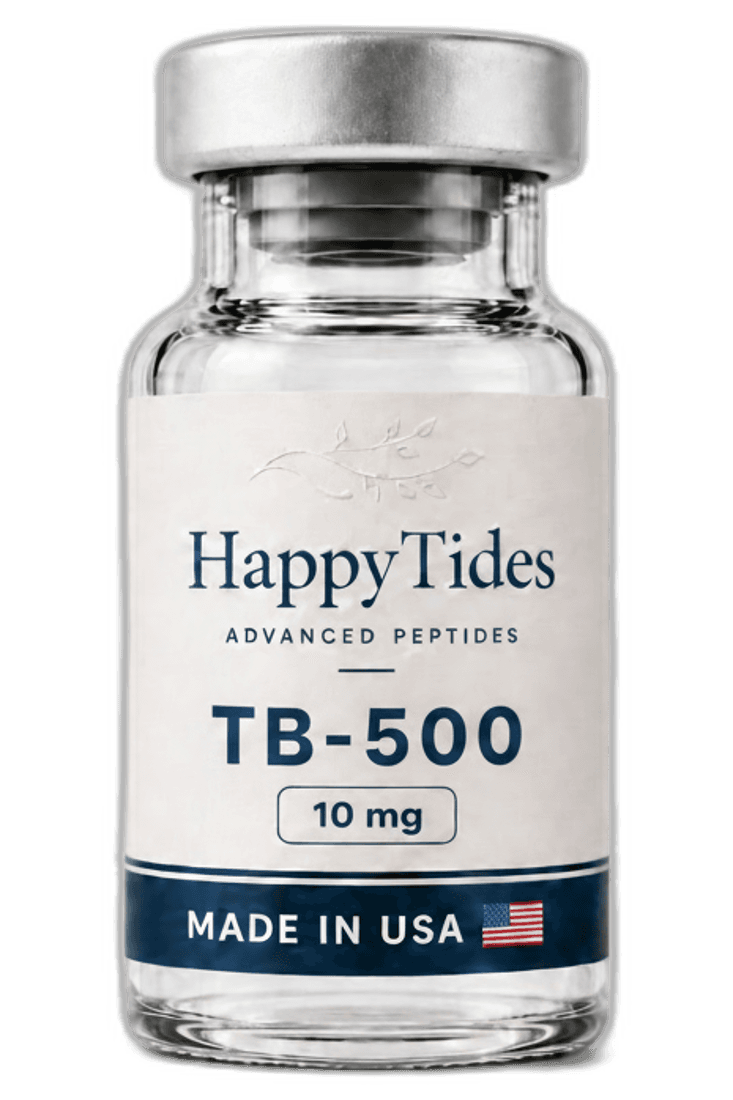
Part of the full TB-500 guide - a synthetic β-thymosin-derived heptapeptide reference compound, identity-verified with a COA on every vial.
In brief
TB-500 is the synthetic N-acetylated heptapeptide Ac-LKKTETQ, corresponding to residues 17-23 of thymosin beta-4 and built around the conserved LKKTET actin-binding motif that defines WH2-domain peptides. In laboratory systems the parent molecule, thymosin beta-4, behaves as the principal intracellular sequestering peptide for G-actin (monomeric actin). Understanding the fragment's mechanism therefore means tracing how the LKKTET motif engages actin, why that engagement holds actin in a polymerization-incompetent state, and how this biochemical activity is read out as altered cytoskeletal behavior in cultured cells. The following sections expand the receptor-independent, actin-centered mechanism beyond a summary: the binding chemistry, the nucleotide-exchange block, and the downstream cytoskeletal consequences observed only in cell-free and cultured-cell models. Throughout, the framing is strictly biochemical and in-vitro; no receptor signaling cascade is implied, because the documented activity is direct protein-protein interaction with actin monomers rather than ligand-receptor binding.
The detail
A closer look
01
G-actin sequestration and the 1:1 complex
The central mechanism is monomer sequestration. In cell-free and cultured-cell systems, thymosin beta-4 binds G-actin to form a 1:1 complex, with a reported dissociation constant in the sub-micromolar to low-micromolar range. By occupying the monomer, it buffers the pool of unpolymerized actin available for filament assembly: monomers held in complex cannot add to growing F-actin ends. This sequestering action is what earns thymosin beta-4 its description as a potent regulator of actin polymerization in living cells, the finding reported by Sanders, Goldstein and Wang (PNAS 1992, PMID 1584803). TB-500 carries the LKKTET motif that mediates this contact, so it is studied as the minimal actin-binding determinant. The equilibrium nature of the complex means actin can be released back into the polymerizable pool, allowing the peptide to act as a dynamic buffer rather than an irreversible sink.
02
Mapping the binding site: LKKTET lysines and the N-terminal helix
Mutational analysis localizes the principal actin contacts to electrostatic interactions involving the LKKTET-motif lysines, such as Lys18, together with an N-terminal helix region. Van Troys and colleagues mapped the actin-binding site of thymosin beta-4 by mutational analysis (EMBO J 1996, PMID 8617195), identifying these charged residues as load-bearing for the interaction. Because TB-500 is precisely the residues 17-23 segment containing LKKTET, it reproduces this charged contact surface in isolation. The electrostatic character of the interface explains why the lysine residues are conserved and why the motif is the defining feature of WH2-domain peptides. This structure-activity logic frames TB-500 as the minimal functional unit that recapitulates the actin-recognition chemistry of the much larger parent peptide, making it a useful probe for dissecting which residues are necessary for monomer binding.
03
Inhibition of nucleotide exchange and the polymerization-incompetent state
Beyond simple occupancy, the parent peptide inhibits nucleotide exchange on bound actin and holds the monomer in a polymerization-incompetent conformation. This dual effect, documented in the mechanistic literature including Goldstein and colleagues (Expert Opin Biol Ther 2012, PMID 22074294), means sequestered actin is both unavailable for filament addition and locked against the ATP/ADP exchange that normally primes monomers for assembly. The thermodynamic consequence is a shift in the equilibrium between G-actin and F-actin toward the monomeric pool. The Hertzog work on the beta-thymosin/WH2 domain (Cell 2004, PMID 15369675) frames how this class of peptide can switch between inhibiting and promoting actin assembly depending on structural context, underscoring that the same motif chemistry can produce different cytoskeletal outcomes.
04
From actin buffering to cytoskeletal readouts
At the cellular level, this actin-regulatory biochemistry is associated in vitro with modulation of cytoskeletal dynamics relevant to endothelial cell migration, tubule formation and angiogenic sprouting. Because migration and tubule assembly depend on coordinated actin polymerization and depolymerization, a peptide that buffers the monomer pool can alter the rates and spatial organization of those processes. Philp and colleagues (FASEB J 2003, PMID 14500546) reported that the seven-amino-acid actin-binding motif is required for the angiogenic activity seen in endothelial cell models, linking the LKKTET chemistry directly to the cytoskeletal phenotype. Critically, all of this is receptor-independent: the documented pathway is direct actin binding, not a membrane-receptor signaling cascade, and every readout described here belongs to cell-free or cultured-cell laboratory contexts.
The fine print: products are sold for laboratory research use only and are not for human or animal consumption. Bodily introduction into humans or animals is strictly prohibited by law. TB-500 is not a drug and is not intended to diagnose, treat, cure, or prevent any disease. These statements have not been evaluated by the FDA.