
MOTS-c Half-Life & Stability
Part of the full MOTS-c guide - a mitochondrial-derived peptide reference compound, identity-verified with a COA on every vial.
In brief
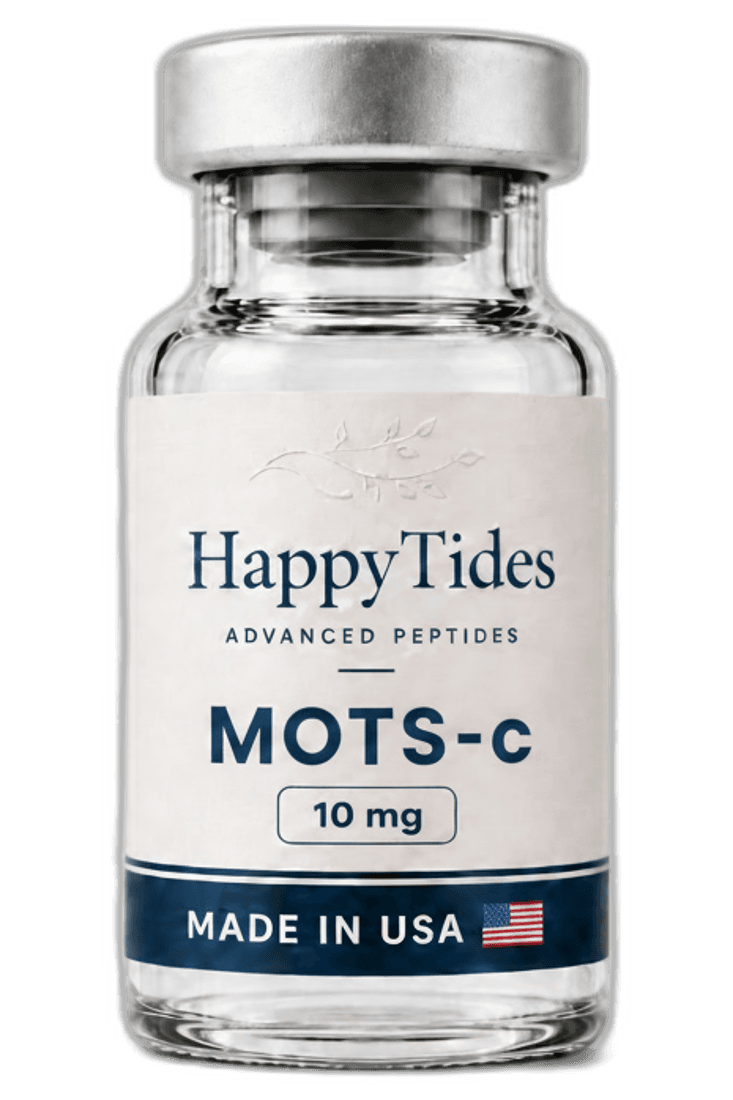
Pharmacokinetic and stability characterization for MOTS-c in this reference is framed cautiously, because the provided entry supplies molecular identity data and mechanistic findings but does not include specific half-life, clearance, or quantitative degradation figures for the peptide. Rather than invent such numbers, this section combines the structural facts that are given with general peptide-class principles, clearly flagging where a statement is a class-level generalization versus a MOTS-c-specific data point. The peptide is a 16-residue, single-chain microprotein of molecular weight 2174.62 g/mol and formula C101H152N28O22S2, a size that places it firmly in the small-peptide range. These structural attributes, together with established behavior of short unmodified peptides in laboratory settings, inform reasonable expectations about handling and stability, but none of the following should be read as a measured pharmacokinetic parameter for MOTS-c, nor as guidance for any in-vivo or human use.
The detail
A closer look
01
What the data support versus general peptide-class behavior
The entry provides MOTS-c's sequence, molecular weight, and formula, but no explicit half-life or clearance value, so any specific pharmacokinetic number would be fabrication and is omitted here. As a general class principle, short unmodified linear peptides such as this 16-residue species are typically susceptible to proteolytic cleavage by peptidases and tend to have limited persistence in biological matrices compared with larger, structurally stabilized proteins. That is a class-level expectation, stated as such, not a measured MOTS-c value. The absence of cysteine residues in the sequence means there are no intramolecular disulfide bonds to confer the kind of conformational stabilization seen in disulfide-rich peptides, which is a structural observation drawn directly from the provided sequence rather than an assumed stability figure.
02
Storage stability and degradation considerations
For laboratory stability, the relevant distinction is between the lyophilized solid and the reconstituted solution. As a general peptide-handling principle, the freeze-dried powder is the most stable form and is best kept cold and sealed, while solutions are more prone to degradation over time. Common degradation routes for peptides include hydrolysis of the backbone and oxidation of susceptible residues; notably, MOTS-c contains two methionine residues (the two sulfur atoms reflected in its C101H152N28O22S2 formula), and methionine is a residue type generally regarded as oxidation-prone, so minimizing oxidative exposure during handling is a sensible precaution. This is a structure-informed, class-level consideration. Because the entry gives no quantitative stability timeline, conservative cold storage and single-use aliquoting are recommended as general best practice rather than as peptide-specific shelf-life claims.
The fine print: products are sold for laboratory research use only and are not for human or animal consumption. Bodily introduction into humans or animals is strictly prohibited by law. MOTS-c is not a drug and is not intended to diagnose, treat, cure, or prevent any disease. These statements have not been evaluated by the FDA.