
CJC-1295 without DAC Reconstitution Guide
Part of the full CJC-1295 without DAC guide - a synthetic growth hormone-releasing hormone reference compound, identity-verified with a COA on every vial.
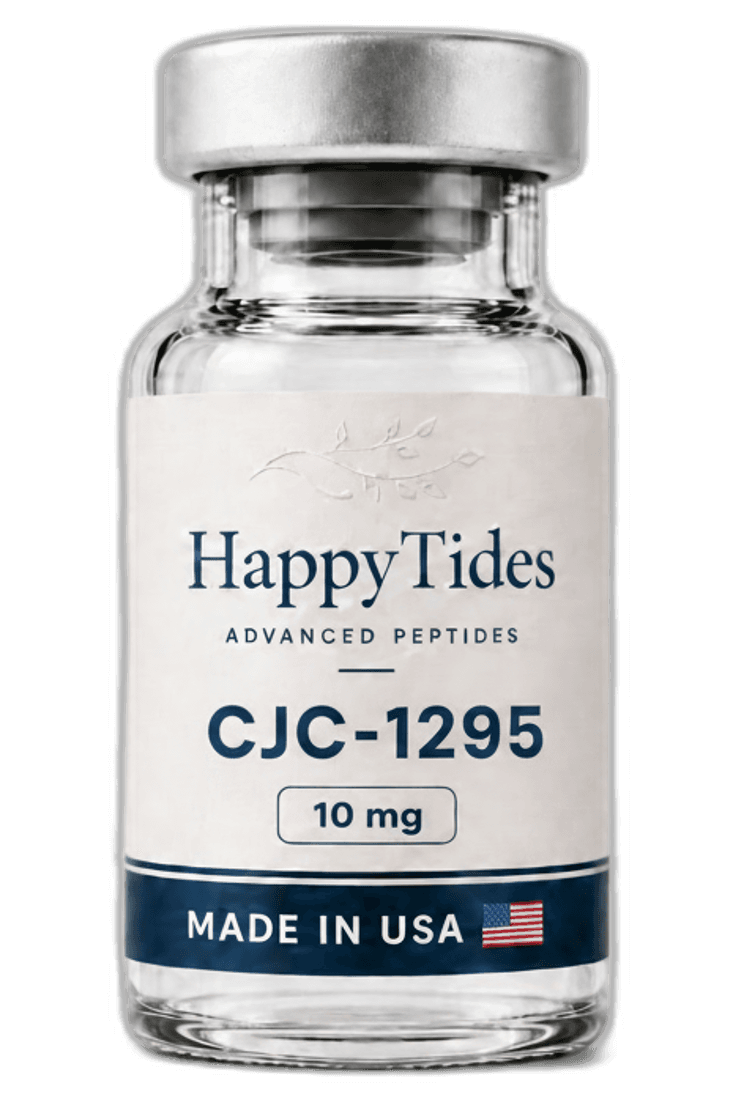
In brief
Reconstitution of CJC-1295 without DAC for in-vitro laboratory research follows the general principles for handling lyophilized research peptides: a solid powder is dissolved in a defined volume of bacteriostatic water to yield a known working concentration for benchtop use. This spoke describes that laboratory preparation, the concentration arithmetic that the molecular weight of 3367.9 g/mol supports, and the storage and stability considerations relevant to peptide handling. It is written strictly for in-vitro handling of research material and is not a human dosing protocol. Because the entry does not provide peptide-specific solubility limits or vial fill masses, the steps below are framed around the general reconstitution method and the math that follows from the provided molecular weight, with any vial-specific values to be read from the supplier certificate of analysis rather than assumed here.
The detail
A closer look
01
Bacteriostatic water and the dissolution principle
Lyophilized research peptides are reconstituted by introducing a measured volume of diluent, commonly bacteriostatic water, directly into the vial so the powder dissolves into solution. The chosen volume sets the final concentration: a larger volume yields a more dilute stock, a smaller volume a more concentrated one. The diluent is added gently against the vial wall rather than forced directly onto the peptide pellet, and the vial is swirled rather than shaken so the peptide goes into solution without mechanical agitation that could stress the chain. This general principle applies to Mod GRF 1-29 as it does to GHRH(1-29) amide analogs broadly; the entry supplies no peptide-specific solubility ceiling, so the working volume is selected within standard laboratory practice and supplier guidance.
02
Concentration math from the 3367.9 g/mol value
Concentration is computed from the mass of peptide in the vial and the diluent volume added. With an average molecular weight of approximately 3367.9 g/mol and a molecular formula of C152H252N44O42, molar concentration can be derived once mass and volume are fixed: for example, reconstituting a given milligram mass in a chosen milliliter volume gives a mass-per-volume stock, and dividing that mass concentration by 3367.9 g/mol converts it to molarity for receptor-binding or cAMP-assay work. Because the entry does not state the vial fill mass, the exact per-milliliter figure is read from the certificate of analysis; the molecular weight is the constant that lets a researcher translate any mass/volume stock into the molar terms used in GHRH-R signaling assays.
03
Storage and stability handling
Reconstituted peptide solutions are generally held under refrigeration for near-term benchtop use, with longer-term storage of aliquots at lower temperatures to limit degradation; repeated freeze-thaw cycling is minimized by aliquoting the reconstituted stock. The structural rationale for stability in this molecule is the D-Ala2 substitution, which the Soule et al. (1994) source associates with DPP-IV resistance and reduced metabolic clearance, but that enzymatic resistance pertains to biological matrices rather than to bench storage of a dissolved stock, so standard cold-chain and aliquoting discipline still governs handling. The lyophilized powder is the most stable state; reconstitution is therefore performed close to the time of experimental use, and unused dissolved material is labeled with concentration and date.
Step by step
How CJC-1295 without DAC is reconstituted
A bench reference for handling and preparation in an in-vitro research setting. Not a personal dosing protocol.
- 1
Allow the sealed vial of lyophilized CJC-1295 (no DAC) and the bacteriostatic water to equilibrate to room temperature before opening, to limit condensation on the powder.
- 2
Sanitize the rubber stopper of the peptide vial and the diluent vial with an alcohol wipe before any needle entry.
- 3
Select a diluent volume of bacteriostatic water that yields the target working concentration for the in-vitro assay, based on the vial fill mass stated on the certificate of analysis.
- 4
Draw the chosen volume of bacteriostatic water and add it slowly down the inner wall of the peptide vial rather than directly onto the powder.
- 5
Dissolve by gently swirling or rolling the vial; do not shake or vortex aggressively, allowing the peptide to fully enter solution into a clear stock.
- 6
Calculate molar concentration by dividing the mass-per-volume stock by the average molecular weight of 3367.9 g/mol (formula C152H252N44O42) for use in binding or cAMP assays.
- 7
Label the vial with peptide identity, concentration, and reconstitution date.
- 8
Refrigerate the reconstituted stock for near-term use and store separate aliquots at lower temperature to avoid repeated freeze-thaw cycles.
The fine print: products are sold for laboratory research use only and are not for human or animal consumption. Bodily introduction into humans or animals is strictly prohibited by law. CJC-1295 without DAC is not a drug and is not intended to diagnose, treat, cure, or prevent any disease. These statements have not been evaluated by the FDA.